
Models of Compression
June 3, 2012
Recent readings: three very different works that use compression to good advantage.
1. Larry Loebell’s short play Will and the Code, just performed by F. Murray Abraham in NYC as part of Resonance Ensemble’s 10th anniversary celebration.
The monologue presents one side of a telephone conversation: theatrical agent Phil O. Strait speaking to his client, Will, about changes Will needs to make in a script to accommodate the new theatrical code. It seems that Will’s play features fairies, enchantment, consciousness-altering substances, a character named Puck, and worst of all, explicit lust. Will gets livid about the recommended rewrites, but Phil, a true professional, handles him smoothly. Loebell, no stranger to politically inspired theater, has posted the entire hilarious piece online at http://loebell.com/will-and-the-code/.
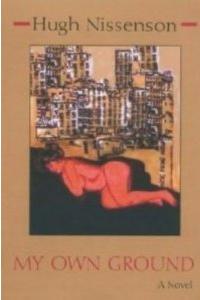 2. Hugh Nissenson’s first novel, My Own Ground (1976), a 181-page tale of a 15-year-old orphaned immigrant, Jake, in the Lower East Side of 1912.
I first discovered Nissenson through The Tree of Life, his amazing 1985 novel of the Ohio frontier. Since then I’ve read Days of Awe, a tender 9/11 novel, and The Song of the Earth, a futuristic fable about a genetically engineered artist. Nissenson’s books roam through time and place. He’s deliberately, perhaps obsessively, innovative, so that he’ll take you into what seems like a generic tale and then bend all of the conventions. Two of his major works include his own strange illustrations, supposedly created by the protagonist. Yet, through all these experiments and variations, his preoccupation with morality and violence remains constant.
In My Own Ground, Jake gets involved with protecting beautiful young Hannele, a rabbi’s daughter, from the pimp who is after her; but Hannele’s self-destructiveness complicates matters. Other characters include a Russian revolutionary who tries to raise Jake’s political consciousness. Though there are plenty of vivid details about immigrant life on the Lower East Side, and even time for a digression or two, Nissenson compresses transitions and omits nearly all of Jake’s self-reflection. For a first-person narrative there’s surprisingly little of the personal in Jake’s fact-driven account; author and narrator let us draw the conclusions ourselves, as in this simple description of Jake’s job and his coworker:
I got eight cents for pressing a tweed jacket and a woolen skirt. The iron weighed fourteen pounds; it was one of those things you knew. I used two of them. There was always one heating up on the stove. I worked at a big table opposite Spiegel, another presser, who’d been at it for six years. His right shoulder was three inches lower than his left; the forefinger of his right hand reached his knee.
“What is it?” he asked me Wednesday afternoon. “What’s the matter with you?”
“Nothing.”
I’d been staring at him. He turned a skirt without pleats inside out, spread it on his board, covered the seam with a strip of canvas, and then reached into the tin pail on his right, squeezed the water from the brown sponge and swept it up and halfway down the canvas, leaving a wet trail. It went on and on: a continuous movement of the lowered shoulder, the elongated arm, the hand wrapped in a wet rag. I saw the swollen blue veins on the inside of his wrist as he tossed the sponge back into the pail. When he picked up the iron, he grunted “Oy” under his breath, and a drop of sweat from his temple ran down the left side of his face; another hung from the tip of his nose.
On the way home, I bought a pack of Tolstoys—ten cigarettes for a nickel…
No comment on the implications of Spiegel’s work, minimal transition away from the scene. Perfect. Nissenson deserves more attention as one of our best novelists; I’m eager to read his latest, The Pilgrim, set in 1622.
3. Farthest North by Todd Balf, a short digital history of Elisha Kane’s disastrous 1853 Arctic voyage in search of the lost Franklin expedition of the 1840s.
As a committed armchair adventurer, I enjoyed this brief—and cheap ($1.99!)—tale of derring-do and unlikely heroes. A sickly sort from a prominent family, Kane drove himself to extraordinary feats. Balf writes some crystal-sharp prose in describing the otherworldly Arctic landscape, the jagged cliffs of ice, the myth of an Open Polar Sea to the north beyond the claustrophobic bergs. Here, though, the need for compression—the publisher’s requirement, I suppose—means that Kane’s background and psychology receive less development than I would have liked. I’m curious to learn more about his love affair with Maggie Fox, one of the three spiritualist Fox sisters of the mid-nineteenth century. Maggie was the one who renounced her séances as fake, and then, after Kane’s death, retracted her confession and went back to conning people. I’d also like to know more about some of the subsidiary characters on the expedition, both those who survived and those who didn’t. But for $1.99, I’m not complaining; Balf has done a fine job with this short-form bio-saga.
Whatever: Sam’s Official Old-Fogey Complaint of 2012
May 26, 2012

A once-tragic figure (from Wikipedia)
At a party not long ago, a friend of mine, a dramatist who teaches film history among other subjects, launched into—or perhaps was provoked into—a sad critique of today’s students. As recently as a decade ago, he said, when he showed films that displayed sexist or racist attitudes or callous violence, he’d get a strong reaction. Today, the students seem indifferent, unprovoked, unimpressed. Nothing moves them.
My friend is of an age (as am I) when old-fogey-style complaints are natural, even expected. I withhold his name, though, to avoid informing his students that he criticizes them in public. But they wouldn’t care anyway, would they? “Whatever,” they’d yawn.
Normally I don’t indulge old-fogeyism except in private. But my friend’s remarks came to mind when I read an interview with Marc Schuster, whose new novel The Grievers was featured in my last post. Marc had this to say about American culture and in particular about his own still-youthful generation:
There’s such an emphasis upon entertainment in our culture that we’re losing the ability to take things seriously. We’re really into melodrama, into quick laughs, into anything that amuses us. Look at The Daily Show for example. I love watching it, but there’s something mildly disturbing about the fact that I get a lot—if not most—of my news from John Stewart. It’s like I can’t digest serious information without a heaping teaspoon of humor to help me get it down. What does this say about me? About people of my generation? When am I going to start taking things seriously? Questions like these were in the back of my mind as I was writing the novel, and they’re also the kinds of questions that plague its narrator.
Let me add a third comment to these two: In the past couple of years, as a subscriber to Philadelphia’s excellent Arden Theatre, I’ve seen two plays that offer a classic mix of comedy and tragedy: Cyrano this past season—a new translation and adaptation of Rostand’s 1897 warhorse—and Romeo and Juliet in 2010. In both cases, the productions had me laughing with the comic bits but utterly unmoved by the tragedy, which seemed as extraneous as a sticky note thumbed onto a computer screen. When the heroes and heroine keeled over dead, I merely noted that they had ceased to be funny. In each case the director (Aaron Posner and Matt Pfeiffer, respectively) was experienced and talented and known for drawing the best out of actors. So I had to blame either myself (have I lost the ability to appreciate tragic deaths on stage? admittedly melodrama has never been my favorite genre) or the actors as a group or the culture as a whole.
I’ll take the broad, easy approach, blaming the culture, and extend what honorary old fogey Marc Schuster said a step further. Not only do we demand “a heaping teaspoon of humor” (or, better yet, a campy irony) with our seriousness, but maybe we’re fundamentally desensitized in some important way.
What’s the reason? Video games! Violence on TV! The Internet! Lying, untrustworthy politicians! Loss of faith! Decline in moral standards! Televised wars from Vietnam to Afghanistan! Facebook! Cell phones!
But notice what most of these comments have focused on: our reaction to pretend-reality. Films, theatrical productions, even the news, which we access through the tinted glass of mass media. What happens when we move into real life? When a young ironist witnesses, say, a bicyclist run over by a truck?
Whatever. Don’t ask me. Just pass the pretzels, dude. What’s on Law and Order tonight?
The Stockholm Syndrome in Fiction?
May 15, 2012
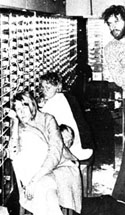
The original Stockholm hostages
My alter(ed) ego, as part of his role in hosting a fiction series at Philadelphia’s Musehouse, has been reading new novels by two interesting authors. Liz Moore’s Heft (W. W. Norton) focuses on a housebound ex-professor who weighs more than 500 pounds—a grotesqueness that I thought would put me off. Overall, there are too many characters in contemporary fiction who don’t resemble anyone I know. It turns out, though, that hefty Arthur Opp isn’t grotesque at all, not in ways that count; he’s extremely human and decent and has a fine appreciation for the finer things in life, including but not limited to crab rangoons (“a crunch followed by lush bland creaminess”). He’s a good man whose story of lost love and found friendship grows more fascinating as it proceeds.
Very different but equally entertaining is Marc Schuster’s The Grievers (The Permanent Press), the tale of a prep-school graduate who arranges a memorial event for a classmate who has committed suicide. Marc satirizes every institution in contemporary America from schools to banks to chain restaurants, and his main character, Charley Schwartz, is a smart-ass who never had a good intention he couldn’t undermine with stupid comments. But Charley, like Arthur, grows on the reader, and once he has slashed away everyone’s pretenses, including his own, he finds a way to connect with people at the end.
My alter(ed) ego did an interview with Liz and Marc for the Musehouse blog. You can find it here. They will be reading and schmoozing at Musehouse on May 19 at 7:00.
Among numerous interesting points in the interview, one that jumped out at me was Marc’s comment about the dangers of first-person narration:
The temptation is always there to go into a character’s head and talk about things like guilt and regret. The narrator can do something petty or spiteful, and immediately you can have her turning to the reader with an apology. The real challenge, though, is conveying that kind of information without getting too interior. Ultimately, being in the narrator’s head is a bit like a hostage situation. As a reader, you’re more or less stuck with the character, so it’s only natural to experience a degree of Stockholm syndrome.
The implication that having the narrator express guilt can be the easy way out ties in with my previous post on Jeremy Barnes’s The Sense of an Ending. In that Man Booker–winning novel, Barnes does exactly what Marc worries about, and it bothered me so much that I felt the reverse of the Stockholm syndrome—the narrator’s whining about his guilt distanced me rather than increasing my empathy.
I say this as the author of an entire novel, McAllister’s Fall, predicated on a man’s guilt. In that book, the protagonist semiaccidentally kills a guy with a baseball bat and spends the rest of the novel clumsily trying to make up for his action (and perhaps making things worse in the process). Maybe it’s proper that it remain unpublished so that I can criticize others’ treatment of remorse without suffering the inconvenience of that emotion myself.
Inappropriate Guilt?
April 28, 2012
I seem to have misplaced two or three months here.
Blame it on the terrorist puppy, who is now a terrorist adolescent. We surely don’t deserve the behavior to which he subjects us. We aren’t in that superindulgent class of dog parents who give their mutt all-natural raw beef treats and scrupulously avoid the word “no.” Look, our boy doesn’t even have his own Facebook page. And we are firm believers in behavioral limits; for example, when he gets in the bed and wiggles under the covers, he is not allowed to put his head on my pillow and snore into my ear. Limits!
Perhaps I should say that such behavior is inappropriate—the term that has replaced bad, wrong, offensive, etc. It’s the word my 20-some nieces use when a middle-aged man (i.e., over 30) hits on them. I find it a strange word, in part because it connotes such a vague, shifting moral ground. It implies that the behavior might be OK if certain conditions were changed, if the timing were different, if …
Of course, an uncertain moral ground is perfect for fiction writers. Like an adventurous puppy, we like to stick our noses in those sticky, swampy areas. However, a book I just read makes me think that in some cases we may overreact to the muckiness by digging too hard and too deep for solid turf.
Think about recent tales that turn on a character’s guilt. Ian McEwan’s Atonement comes to mind—a narrative set in motion by a lie told by a 13-year-old, a nasty falsehood with tragic consequences. The man she accuses goes to jail, gets out only by volunteering for World War II, gets killed in the field. Still, the shameful deed was committed by a barely adolescent girl, in part because of her misunderstanding and wild imagination (she’s a budding novelist), so is it really appropriate (that word again) that she spend the rest of the novel, covering many years of her life, with a pressing need to atone?
 The book I’ve just finished is Julian Barnes’s The Sense of an Ending. In this case the perpetrator of the nasty act is a 20ish young man, Tony Webster, who writes an intemperate letter to his ex-girlfriend who has taken up with his best pal, who later commits suicide. Not till page 161 of 163 do we finally grasp the consequences of this missive. By accident, the letter cursed the two lovers with a miscellaneous semi-prediction of something that more or less happened. As it turns out, the letter prompted the friend to do X, which led to untoward behavior with Y, which resulted in surprise outcome Z (loosely implied in the letter), which occasioned the friend to take the drastic way out of his predicament. We’re asked to believe that, with these truths revealed, the words of his long-ago rant will “forever haunt” Tony. He’s prey to a sharp remorse that, he reminds us, literally means biting again. Luckily he’s old by now, so he won’t be bitten for long.
I find it hard to conceive that a mature adult—and Tony is quite an ordinary kind of guy, as he readily tells us—would be haunted by a culpability established only through a long skein of consequences that verge on coincidence. “Imagine the strength of the bite,” he demands, when he discovers that his angry curses have come true; this “has a shiver of the otherworldly about it,” he claims (p. 151), but I don’t buy it. Regret, yes; stunned disbelief, sure. Everlasting remorse, no.
These two novelists—both British, both Man Booker winners (Barnes for this book, McEwan for an earlier one)—seem to be reaching for sins their characters can feel guilty about. McEwan’s attempt is more convincing, since the consequences are more direct. Still, I want guilt to be purer and simpler, rawer, less intellectual.
Thus an aphorism: Guilt without appropriate guiltiness is inappropriate.
The Mystery of Alice and Her Brothers
February 2, 2012

“Henry James was drunk.”
So begins an entertaining literary mystery by Paula Marantz Cohen, What Alice Knew (Sourcebooks, 2010), set in 1888 London during the rampage of Jack the Ripper. Cohen’s animating conceit is that the baffled London police call in the famous American psychologist-philosopher William James for consultation. This puts William in the same city as his brother, the novelist Henry, and their sister Alice, a professional invalid, and the three collaborate in the investigation.
The notion of police employing a psychologist/spiritualist/weirdo is commonplace now, at least in fiction. On TV there’s the popular series The Mentalist, among others. In print, Caleb Carr’s 1994 mystery bestseller, The Alienist, sets up a team of a psychologist, a writer, and a secretary to investigate a serial killer in 1896 New York.
Cohen’s basic set-up is far from original, then. But her Jameses, as eccentric as they are famous, become as psychologically interesting as the killer they track. Alternating their points of view, Cohen allows each to contribute a unique perspective to the investigation. The style is fluid, and the dialogue sparkles. Minor characters like Oscar Wilde and John Singer Sargent step in to enhance the ambiance. Sly humor undercuts the characters’ pretenses, especially Henry’s; the poor chubby aesthete never quite recovers from that classic opening line.
After the recent speculation on the Jameses, Cohen could have made their own relationships as lurid as the Ripper’s slashings. It’s to her credit, I think, that she does NOT put William in bed with Alice, Henry with the male artists’ model, or Alice with her devoted live-in companion. Cohen’s Jameses flout Victorian convention only in their unconventional thinking, which in itself offers plenty of sizzle for this fine novel.
A few announcements to conclude this post:
- The second installment of my story “End of the Ride” is up at The Piker Press. In place of similar annoying advertisements for the third and fourth parts, I’ll direct anyone who’s interested to this link to a page that should list each section as it becomes available.
- My story “MG Repairs,” which came out in Carve Magazine in 2010, will be included in the magazine’s 2009–2010 Anthology. Why two years late? Because editor Matthew Limpede has a sensible approach to the absurd rush of our lives. Myself, I favor setting the clock back to 1993.
- My novel The Shame of What We Are is now available as an e-book from Amazon and Barnes and Noble. Everybody who’s not reading it in paperback can now not read it on a screen as well. But they’ll be missing the wonderful illustrations by Tom Jackson, which come out surprisingly well in the e-book.
- “Wright has found a way to wed fragments of an iconic America to a luminously strange idiom, eerie as a tin whistle, which she uses to evoke the haunted quality of our carnal existence.” So said The New Yorker about poet C. D. Wright, who will be reading on February 2 at Villanova University’s Literary Festival. I love tin whistles. Complete info. about the festival, which will include William Kennedy and several other luminaries, is available here.
The Piker and the Long Story
January 23, 2012

Viewing, by Sand Pilarski
Many thanks to The Piker Press, and editor Sand Pilarski, for running my long story “End of the Ride” in four installments, beginning today. Linc, the story’s protagonist, attends the funeral of his scapegrace cousin, Wayne Shit-for-Brains, and tries to behave properly though he feels not a smidgen of sorrow at Wayne’s demise. Throughout the day—and this is the crux of the story—he tries to suppress his memory of a shameful escapade with Wayne when they were teenagers.
Sand herself created the accompanying illustration, and I think it expresses Linc’s conflictedness. Though he’s trying to appear nonchalant, you can see the stiffness and resistance in his posture.
Compared to print outlets, web magazines have an obvious cost advantage in publishing long stories, but most still prefer short pieces. Kudos to the few, like The Piker Press, that will give space to the long form. Serialization is one answer to the public’s supposed unwillingness to read long pieces online. Next Monday, after the latest episode of Downton Abbey on PBS, come back for more on The Piker Press.
Delicate Sensationalism
January 14, 2012
 In my disorganized reading of found books—volumes that turn up in the house with no invitation on my part, usually left behind by my wife, daughter, or a friend—the most recent was Black Dogs, a 1992 short novel by Ian McEwan, a writer I admire but can imbibe only in small doses. As is typical of McEwan, the story is unconventional, a bit weird, unpredictable. It’s a good read. Yet it indulges in a technique that my purist side deplores.
When pop novelists use bodice-ripping and gruesome slayings to spice up a plot, serious critics can dismiss the effort as mere sensationalism. But what happens when a top-notch literary writer employs similar elements, in a much more skillful way, and presumably to a higher purpose?
In Black Dogs—SPOILER ALERT, if anyone who hasn’t read this 20-year-old novel still plans to—the narrator, Jeremy, is writing a memoir about his in-laws, June and Bernard. The two have long been estranged, in part because of a transforming experience in 1946, on their honeymoon, when June encountered two large dogs in the French countryside. The animals provoked a revelation about good and evil that propelled her into decades of spiritual exploration, at odds with Bernard’s involvement in politics. Tantalizingly, throughout the novel, the author merely alludes to the key event. The explanation arrives in the last chapter with a vivid description of June’s being cornered on a lonely mountain path by feral dogs “of an unnatural size,” as big as donkeys:
she saw them as a juddering accumulation of disjointed details: the alien black gums, slack black lips rimmed by salt, a thread of saliva breaking, the fissures on a tongue that ran to smoothness along its curling edge, a yellow-red eye and eyeball muck spiking the fur, open sores on a foreleg, and, trapped in the V of an open mouth, deep in the hinge of the jaw, a little foam, to which her gaze kept returning. The dogs had brought with them their own cloud of flies. Some of them now defected to her.
The beasts slink forward to attack; June fights them off with rocks, a penknife, a rucksack and a distracting sausage.
But that’s not the real climax.
Later, in the inn where the newlyweds are staying, the proprietress and the mayor explain the dogs’ origin. During the war, the canines were brought to the region by the Nazi Gestapo to terrify the populace, which had supported the Resistance. Left behind when the Germans fled, the dogs have been living off the sheep.
Against the wishes of Mme. Auriac, the innkeeper, the mayor then proceeds with the story of a young woman, Danielle Bertrand, who had moved to the village during the war. She turned up at this very inn one day bleeding and gibbering, with her clothes torn.
Mme. Auriac said quickly, ‘She had been raped by the Gestapo. Excuse me, madame,’ and she placed her hand on June’s.
‘That was what we all thought,” the Maire said.
Mme. Auriac raised her voice. ‘And that was correct.’
‘It’s not what we discovered later. Pierre and Henri Sauvy—’
‘Drunks!’
‘They saw it happen. Excuse me, madame’—to June—‘but they tied Danielle Bertrand over a chair.’
Mme. Auriac slapped the table hard. ‘Hector, I’m saying this to you now. I will not have this story told here.’
But Hector addressed himself to Bernard. ‘It wasn’t the Gestapo who raped her. They used—’
Mme. Auriac was on her feet. ‘You will leave my table now, and never eat or drink here again!’
Hector hesitated, then he shrugged, and he was halfway out of his chair when June asked, ‘They used what? What are you talking about, monsieur?’
The Maire, who had been so anxious to deliver his story, dithered over this direct question. ‘It’s necessary to understand, madame.… The Sauvy brothers saw this with their own eyes, through the window … and we heard later that this also used to happen at the interrogation centers in Lyon and Paris. The truth is, an animal can be trained—’
At last Mme. Auriac exploded.
Though the proprietress goes on to accuse the mayor and his cronies of spreading vicious rumors, the lurid secret is out. The tale is told ever so delicately, with many hesitations by the characters themselves, the culminating words never actually spoken … but it’s sensational nonetheless, and in this moment the titular black dogs acquire their full load of symbolism for June and for the reader.
And at this point in the book, a dozen pages from the end, I was annoyed at McEwan.
Not that I mind hearing about monstrous things in fiction. But there’s a tawdriness in this teasing and titillating of the reader to build toward a revelation of appalling sexual torture. It doesn’t matter how fine the prose—which indeed is brilliant—and it doesn’t matter whether rape by trained dogs was in fact a Nazi method. Nor does the symbolic intention justify this device. The author is playing with the reader’s ability (and willingness) to be shocked, and in my snooty opinion that’s a low-class trick unworthy of the best fiction.
All right, I admit it: in literary terms, I’m a prig.
Now I’ll move on to the next found book, which an unidentified person just slipped through our mail slot: the peculiarly appropriate Dogs for Dummies—a donation inspired, no doubt, by our new terrorist puppy.
Precious Nonsense
January 7, 2012
 A couple of years ago, the University of California at Berkeley employed its marketing sleuths to track me down. Not that they have any idea who I am, but they get the fundraiser’s frisson of delight whenever they can tag someone by mail or phone. Recently they’ve shared their data with the English Department, which now sends me a glossy departmental newsletter for “alumni and friends.” The current issue celebrates Kent Puckett for winning the university’s Distinguished Teaching Award, and in a separate article boasts that department members have won the award as often as the “second and third most awarded departments … combined.”
I would like to think that the person who wrote and/or edited the phrase “most awarded departments” was not one of our graduates. However, the article got me thinking about the incidents I remember from the English faculty’s pedagogy. I recall Stephen Booth spending long moments chewing his fingernails and gazing out the window while formulating the perfect question for his freshman composition class. His skills earned him the teaching award in 1982, or perhaps the university decided to save his fingernails. Another fond memory is of Stanley Fish challenging his entire Milton seminar to a basketball game with him and his friend Booth. Those who know the height differential will chuckle to imagine Fish and Booth together on the hardwood. Our seminar members, though, were far too cognizant of Fish’s personality to take up the invitation; hell, he was aggressive enough around a seminar table—who’d want to try to stop him on a drive?
My best story from that time, though, concerns the final exam that Booth gave to his struggling, straggling frosh writers. His highly individualistic syllabus that year had included, among other motley items, several New Yorker essays by A. J. Liebling, Thoreau’s Walden, and Thomas Carlyle’s Sartor Resartus. (Since then, I don’t think I’ve met any nonacademic who has ever read any portion of Carlyle, much less a complete book.) Our final exam—probably administered only because an exam was required—consisted of two questions. One item presented the entire text of the Gettysburg Address (less than 300 words) and asked why it was a great speech. Many scholars have studied the Address—including Booth himself, in his book Precious Nonsense—but to 18-year-old undergraduates (actually, I was 17, with the astonished mind of an 8-year-old) the question was flummoxing. We had not studied Lincoln in class; we had not discussed oral rhetoric. Most of us had little notion of the historical context. How to begin an answer? If the famous G.A. was indeed a great address, we hardly knew that.
The exam’s second question was worse. It consisted of a passage by Thoreau describing the experience of reading Carlyle. Though I can’t be certain, I think it must have been this paragraph from “Thomas Carlyle and His Works”:
Such a style — so diversified and variegated! It is like the face of a country; it is like a New England landscape, with farmhouses and villages, and cultivated spots, and belts of forests and blueberry swamps round about, with the fragrance of shad-blossoms and violets on certain winds. And as for the reading of it, it is novel enough to the reader who has used only the diligence, and old line mail-coach. It is like traveling, sometimes on foot, sometimes in a gig tandem; sometimes in a full coach, over highways, mended and unmended, for which you will prosecute the town; on level roads, through French departments, by Simplon roads over the Alps; and now and then he hauls up for a relay, and yokes in an unbroken colt of a Pegasus for a leader, driving off by cart-paths, and across lots, by corduroy roads and gridiron bridges; and where the bridges are gone, not even a string-piece left, and the reader has to set his breast and swim. You have got an expert driver this time, who has driven ten thousand miles, and was never known to upset; can drive six in hand on the edge of a precipice, and touch the leaders anywhere with his snapper.
The task was to explain how this passage reflected the styles of both Thoreau and Carlyle.
OK, one might think, Carlyle is indeed varied, unpredictable, sometimes difficult, emphatic and lyrical by turns, with odd broken rhythms; Thoreau of course is highly metaphorical, a guy who would rather take you on a jolting ride through an alpine mountain pass than tell you straight out what he means. That’s not very deep; what else can you say?
For this exam you have three hours to scribble in your blue book (literally blue, purchased for this express purpose from the college bookstore). Your output should reflect intense thought and careful writing, all that you have learned in the course. Are you getting nervous? Have you bitten through your ballpoint yet?
Man, I was terrified, and I left the room knowing I’d failed. Till then, to my surprise, I’d managed an A in the class, and now I had to hope for an overall C at best.
At that time, the system for discovering your final grades was simple and highly impersonal. Along with your blue book, you handed in a self-addressed postcard with two lines on it for your grades:
Grade in Course: ______
Grade on Final Exam: ______
Some week or ten days later, the news would arrive in the mail. A highly expressive instructor might write one or two extra words on the card in addition to the two all-important letters.
So I waited. The cards came from other courses: success! But from Professor Booth? I imagined him mauling his nails as he contemplated the collection of precious nonsense that 25 pimpled idiots could write in three hours. From my current perspective, I wonder how any instructor can bear to read three hours of drivel from a single freshman.
The card arrived. At this point I don’t remember whether any of my roommates saw it first; if they did, that surely increased my embarrassment. Slowly I inverted the post-office-smudged rectangle to reveal the back. It read:
Grade in Course: A
Grade on Final Exam: Forget it!
That’s when I knew I led a charmed life.
After all these years, thank you, Professor Booth.
Keeping Up with the Ancestors
December 24, 2011

In keeping with the holiday tradition of honoring ancestors, even those long forgotten, this item from the 12/9/11 edition of the Gridley Herald (published in Gridley, CA) caught my eye:
75 Years Ago (1936)
Following complaint by W.P. Smith of Live Oak of violations of the State wage act, Sam Gridley, local grower, appeared in the Live Oak Justice Court yesterday settled his account with Smith in full and paid a $15 fine.
Though I’m not aware of any Gridley relatives in that part of California (near Yuba City), I’m happy that my namesake was brought to justice. If he has any remaining debts, I disown them and him. I swear that the only field hand I employ is my wife, who makes the garden grow and always exacts a fair wage from me for the basil and parsley she produces. Peace and good will to all.
Blogging in Kenya
December 22, 2011

Kisumu, Kenya (from Wikipedia)
For those who aren’t yet following Busara Blog, David Sanders’s ongoing account of his return to a Quaker mission in Kenya (where he is both researching a novel and exploring his childhood memories), be sure to check out his latest post. “The News from Kenya, Part Two” is a highly colorful description of a part of the world that few outsiders are unlikely to encounter. And he proves that, no matter where you live, home renovation is excruciating.
 The News from Gridleyville