
The Ape Goes Live
January 5, 2015
A quick post to announce that my novel The Big Happiness is now available as an ebook in Kindle format, presumably readable on any device with a Kindle app. Here’s the link.
 The novel features a brain-damaged alcoholic who calls herself Allison Wonderland, along with her eccentric, half-blind lover Leigh Berry, who speaks in his own semi-invented language. A “normal” friend of theirs, Connie Bowers, tries to guide them through their misadventures, while assorted other colorful and wacky types, including a giant imaginary ape, play supporting roles. (Note the ape peeking out at the bottom of the cover.)
The book is kind of about “disabilities,” in all senses of the word; kind of about spirituality; and kind of just crazy. I hope some readers enjoy it and none accuse me of exploiting innocent apes for commercial gain.
Drawing from Life
August 19, 2014
Robin Black’s novel Life Drawing is remarkable in many ways. So many reviewers have praised the book already that there’s no need to add to the chorus, but I want to note one element in particular.
A ba d thing happens in this book. A big, bad thing, with a clear victim and a clear perpetrator. But what makes the act unusual is that everyone is guilty in some sense. The victim bears some guilt. So do three other people who did not commit or encourage or sanction the bad thing but nevertheless helped move it toward fruition.
That strikes me as more true to life than we care to acknowledge on a daily basis. We may nod at the author’s wisdom, but in real life we prefer to get outraged. We like to draw hard lines between the innocent and the guilty, point our fingers at the bad guys and clamor for justice. For just a moment, think of how often we do this when discussing, say, Palestine, gun violence, political rebellions, multigenerational poverty, _____ [insert controversial subject of your choice].
Ms. Black’s one sin against realism in Life Drawing is that she allows her characters to recognize how much they have all contributed to the evil. In real life, we won’t admit any such thing.
If only we could be as smart as our best novelists …
One Reason I Like Fiction
December 18, 2013
My wife recently read Blue Nights by Joan Didion, a moving memoir about the author’s loss of her 39-year-old daughter. Like many other readers, Peggy admired the book but remained puzzled about what exactly killed the still-youngish woman. The memoir is “a little less than clear on the events that took place.”
I haven’t read the book myself and have little right to comment on it. The link on the quotation above leads to an article that discusses the possible diseases involved and reasons why Didion may have dodged the issue—if indeed “dodged” is an appropriate word for a deliberate decision by a well-respected writer whose recent work has courageously been “turning the scalpel on herself.”
My point here is that, in a novel, the author would not have been able to conceal or evade such a basic fact. If the daughter were a fictional character, readers would demand to know what was going on, and editors would demand that readers be satisfied. Perhaps one could structure a novel so that the mystery itself, the unknowability, became a central theme, but that’s a different question.
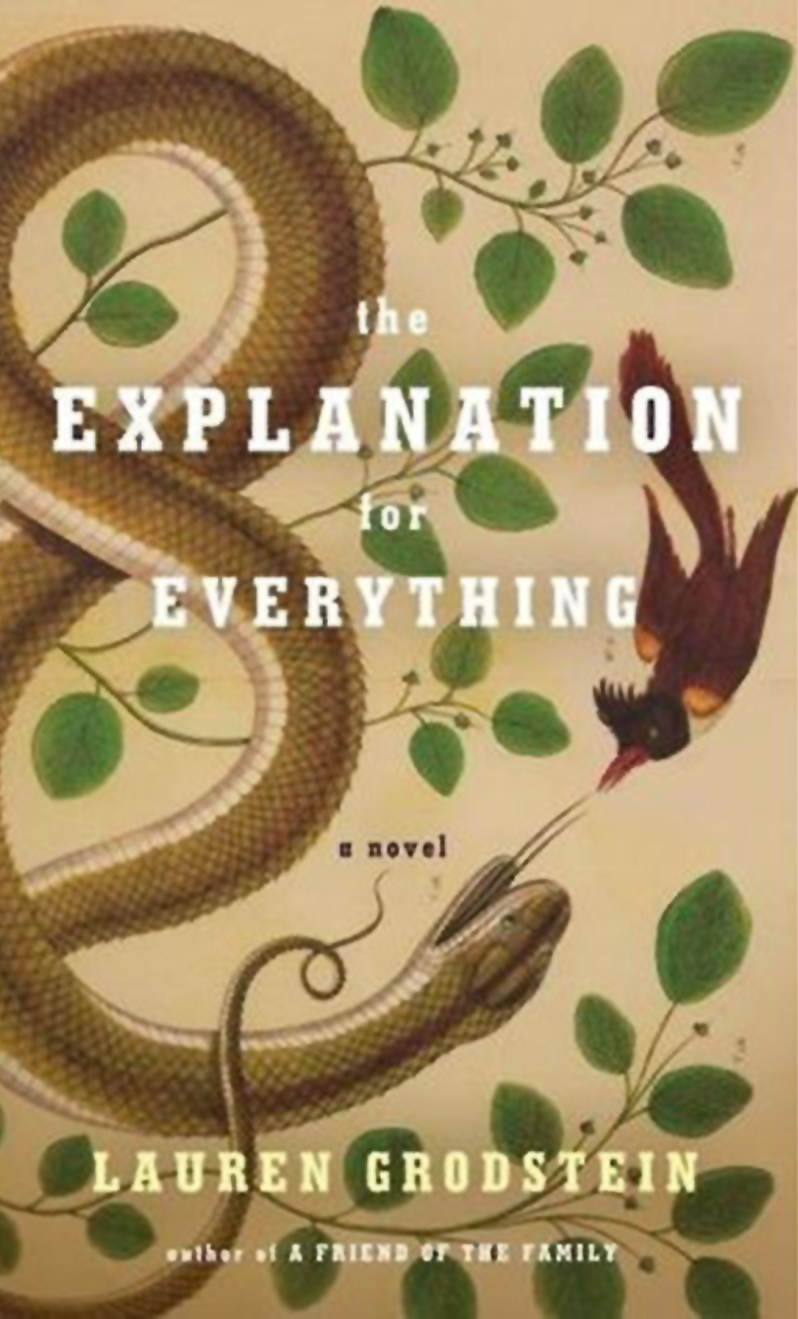 I’ve been pondering this matter in connection with two Philadelphia-area authors who will be reading at Musehouse in January: Lauren Grodstein and Susan Barr-Toman. Both tackle difficult subjects without flinching from the details. Grodstein’s 2009 novel A Friend of the Family centers on a suburban doctor who has clear and reasonable ideas about right and wrong and who gets into deep trouble, personal and moral, when he tries to act on those notions. Her latest novel, The Explanation for Everything, features a widowed biologist whose trust in science is challenged by a student who believes in God. Not the usual pattern of religious faith undermined by science, but the reverse—and though there’s plenty of humor in the situation, the novel takes the challenge by faith quite seriously. The protagonist’s science begins to fail him; his experiments go wrong, and his Darwinist convictions bring him little solace for the death of his wife. Enter a Christian student—a nubile female, no less—who offers both personal and spiritual comfort…
 Susan Barr-Toman’s novel When Love Was Clean Underwear, winner of the Many Voices Project award, was published by New Rivers Press in 2009. It begins with an elderly, terminally ill woman demanding that her live-at-home daughter help her commit suicide. The mother prepares a series of index cards with detailed instructions for each step: “Number One: Place pillow over my face and apply firm but gentle pressure for a minimum of five minutes.” After the suicide/murder in the first chapter, the introverted and now-culpable daughter has to make a life for herself—and that’s the story for the rest of the book.
Most fiction writers choose easier topics, of course. But the genre allows us—indeed, challenges us—to explore the hardest truths in depth, without flinching. And that’s why I think fiction is often truer than memoir, truer perhaps than what we call real life, which for many of us teems with artificialities.
Grunge in the Burbs
June 16, 2013
 Conquistador of the Useless, the first novel by Joshua Isard, teems with references to bands I’ve never heard of. The book is also way too cool to use quotation marks around dialogue. All this should annoy me, but I enjoyed the tale anyway.
The story is told in the first person by Nathan Wavelsky, an early-thirties guy with a boring desk job, a nice wife, Lisa, a new home in the suburbs and a passion for grunge and pre-grunge bands that speak to his alienation. How does a grunge couple end up in the burbs? Well, they left the hip inner city because they got tired of the noise and the hipsters’ pretense. Of course, Nathan doesn’t like the pretense of the suburbs either; he’s immediately snarky about the new neighbors who invite them for dinner:
So, Kristy [the neighbor wife], says, how long have you been married?
Four years, Lisa answers.
That’s wonderful, Kristy says, we’ve been married almost eight years now.
She says it like they’d beaten us at some contest.
That’s typical of Nathan’s sarcasm. There aren’t many people he cares for. What he does like is drinking tea in the tree-shaded quiet of his backyard, bothered by no one. He also loves listening to his music, reading his books. He has no ambitions and doesn’t see the need to develop any. Isard sets him up, in fact, as a prototype of his generation. Here’s Nathan describing himself and Lisa during and after college:
Neither of us were National Merit Scholars or Phi Beta Kappa members—we always studied, but refused to end up in the college’s counseling office because we had anxiety attacks over a B.
This is also the way we treated our jobs. We worked hard in the office, but tried not to think about it when we got home.
It wasn’t that we didn’t aspire to a promotion, it’s that we didn’t aspire to anything. We were the kids who heard their public school teachers tell them that they could be anything, even President of the United States; whose parents insisted that we would be the generation to change the world; who grew up in the age where everyone’s special.
Then we looked at the politicians, our teachers, our peers.
And we said, Horseshit.
And we were happy.
With Nathan thus coasting through life, Isard tosses him some trouble. Nathan’s best friend, who has become a rich adventurer, breezes into town and invites him to climb Mt. Everest. The thought intrigues Nathan because he has always liked climbing mountains (though he has no experience on difficult ones) and because he’s drawn to experiences that are “wonderful and useless.” But a trip to Everest, with the real possibility that he might freeze to death there, conflicts with Lisa’s sudden interest in beginning a family. Nathan finally grasps Lisa’s seriousness about nesting when she starts painting the house by herself and buying new furniture:
We’ve been here for five months, Nathan, and until today we had a hobo’s table next to our couch, a bedroom that makes a summer camp cabin look ritzy, and no plan for any of it. We’ve got a stove, a dishwasher, and a washer/dryer that came with the place because the last owners didn’t want them anymore.
Yeah, I say, but those things still work fine.
Who gives a shit if they work, she says, they’re not fucking ours.
It is, at this moment, that I realize the full gravity of the situation.
Nathan also gets into trouble by lending Vonnegut’s Cat’s Cradle to a teenage neighbor girl, Rayanne, a cultural faux-pas worsened by his indifference to propriety. He is shunned by the adult neighbors, who assume he’s been corrupting minors, and again Lisa is not amused:
What kind of relationship do you have with Rayanne?
The kind where I lend her books and music.
And where you think about how hot she’s going to be.
Oh come on—
Is it also the kind where you invite her into our house when I’m not home?
Yeah, I say, to give her a book.
You didn’t tell me that part of the story, she says, you didn’t tell me she came in here with you. How do you think that looks?
I don’t know, I say, polite?
The humor, as should be evident by now, keeps Nathan amusing even when his unwillingness to be impressed with life becomes profoundly unimpressive. Yet, since this is a Serious Novel, Nathan does at last experience Personal Growth—and though I’m capitalizing these concepts to poke fun at them as Nathan himself might, the end is genuinely moving as well as unexpected.
It’s a good read even if you’ve never heard of Pixies, Green Day, Social Distortion, Mudhoney, Screaming Trees, or Jane’s Addiction. Even better, I guess, if you have.
A Fragrant Tragedy
June 10, 2013
From the opening of Ru Freeman’s ambitious and moving new novel, On Sal Mal Lane, set in her native Sri Lanka, we know that tragedy looms. The Prologue, in italics, sketches the background of the conflicts between Sinhalese and Tamils that erupted into war, and the first chapter of regular text begins in this way:
“God was not responsible for what came to pass. People said it was karma, punishment in this life for past sins, fate. People said that no beauty was permitted in the world without some accompanying darkness to balance it out, and, surely, these children were beautiful. But what people said was unimportant; what befell them befell us all.”
Lest we forget the context, this narrative voice from on high returns from time to time to update national political developments and remind us of the doom hanging over the characters.
Yet the novel’s basic action scarcely ventures beyond the tiny, flower-bedecked, semirural lane of the title, on the outskirts of the capital city, Colombo. The people there form a microcosm of Sri Lankan ethnicities and religions—Sinhalese, Tamils, mixed-race Burghers; Buddhists, Hindus, Muslims, Catholics—all in the space of nine households. Most of the plot centers on the children of Sal Mal Lane, especially the four Herath kids, who are sensitive, talented and a bit more upscale than their neighbors.
Perhaps the novel’s greatest achievement lies in the way it locates significance in the tiniest domestic actions. A wayward teenager, Sonna, quarreling with his father, is denied a birthday party. As a make-do, Sonna’s mother invites the Herath children over for an elaborate dinner without stating that it’s for the boy’s birthday. Later, discovering the truth, the Heraths feel bad that they didn’t take a present. They count out coins from their allowance to buy a chocolate for Sonna, put it in a shiny bag and try to deliver it. He isn’t home, though, so they stash it in their refrigerator to keep it from melting. The next day, Mr. Herath, rummaging for a sweet after lunch, finds the candy and eats it. The children are too abashed to stop him, afraid their mother will find out they’ve been associating with Sonna. Having no money to buy another treat, they reconcile themselves to feeling ashamed, and they let the matter drop.
Ending a chapter, this little tale hovers as a portent. How will the mistakenly consumed chocolate contribute to the slowly unfolding tragedy? This technique encourages the reader to focus on causes rather than on what comes next. For me, though, the weighty foreshadowing has its downside because it discourages page-turning; I was none too eager to arrive at the moment of implosion.
Another potential difficulty is that the profusion of characters makes it hard to become deeply invested in any one of them. Eventually the reader comes to care for several of these people, but it takes a while. Among the Heraths, there are four children of various ages, plus the father and mother. Five other children play significant roles, as do ten or more adults. The interplay is complex, and even the troublemakers and bigots have some redeeming features. The upside is that we get a rich, complex view of a neighborhood, both its uniqueness and its inability to escape the sociopolitical trends that are drawing the larger society into turmoil.
The language is often as fragrant as the blossoming sal mal trees that surround the lane and the spicy curries prepared by the women. In these lyrical passages Freeman’s affection for her homeland shines through. Here’s a paragraph plucked almost at random:
“The gusty wind that dominated a short respite from the monsoons was beginning to tease the children of Sal Mal Lane. It tugged at their school uniforms, inverted umbrellas held against the sun, and combed and recombed their hair, first this way then the other. It whispered stay! stay! to them as they stood waiting for their school buses, shivering in the cool morning hours, a request they tried not to hear. They giggled as their skirts and shirts lifted this way and that, their books fell out of their careless hands, and the ribbons tied into their braids and ponytails, blue and white for the Herath girls, green and white for the Bolling twins, refused to stay in their knots. But each evening the children acquiesced. They put down their books, put on their home clothes, and went outside. They went to fly kites.”
Another treat is the occasional profound remark that could be framed and mounted on the wall. At one point the younger Herath boy, Nihil, seeks reassurance about the rumors of civil war and the announced intention of other boys on the lane to join the army. He questions his friend, old Mr. Niles, who answers: “People do not go to war, Nihil, they carry war inside them.” At times such philosophizing can become a bit heavy-handed, but it serves to reinforce the themes of the novel.
When the long-awaited tragedy arrives, it occurs on two levels. On one level we witness a political event as the quiet street is overcome by the conflict raging around it. But the greater tragedy is rooted in the personal stresses we have seen developing: father vs. son, neighbor vs. neighbor, social outsiders trying to gain a place among those they admire and envy. No one on Sal Mal Lane is entirely innocent. As the second-oldest Herath child, Rashmi, reflects near the end, “Everybody was responsible for what had happened to their street.”
Even as calamity intrudes, however, the people of the lane bond together, across ethnic boundaries. The victims are cared for by their neighbors. The dénouement rekindles a sense of hope, and the novel ends with a young person reading from Malory’s Le Morte d’Arthur, “a tale of striving for high ideals amid human frailty, turmoil, and change.”
On Sal Mal Lane is not a quick read but one to savor, one whose images and ideas will linger in the reader’s mind.
A Pilgrimage with Hugh Nissenson
June 30, 2012
I hereby publicly confess my sins.… I shall write in plain style and tell the truth as near as I am able.

Such is the promise of Charles Wentworth at the outset of The Pilgrim, Hugh Nissenson’s latest novel (Sourcebooks, 2011), and Charles keeps his word, laying out truths more severely than a fundamentalist preacher. Like Nissenson’s previous works (see, e.g., my comments on My Own Ground), this book makes “unflinching” an understatement. The stern eye on human life will never blink. The Pilgrim is a wise and moving book, a finely crafted book, and not for the faint of spirit.
The year is 1623, and the life of man and woman in Plymouth Colony—and in the England that the colonists have fled—matches the famous phrase Hobbes would use 28 years later in Leviathan: “solitary, poor, nasty, brutish, and short.” Except that Hobbes was describing what he called the state of nature, an imaginary condition without culture or government. Nissenson often turns that philosophy on its head, revealing how much blame lies with the institutions that supposedly protect us from our base instincts.
The demands of his Puritan faith torment Charles; he agonizes over his sins and doubts his salvation. At one point, when he complains to a friend that his soul is “quiescent,” the friend offers the kind of capsule life story that the novel uses several times to devastating effect:
Hook replied, “Better than poor Annie Watts in Worksop. She tormented herself day and night as to whether she be damned or saved. She could not bear not knowing, so she threw her four-month-old babe, Clyde, down a well, wherein he drowned. Said Annie, ‘’Tis better to know that I am damned than not to know what God plans for my soul throughout eternity.’ They hanged her.”
Charles will not fault religion for burdening Annie’s mind or the state for executing a mentally disturbed person, nor will the author breach the form to wink at us. Rather, as the ultimate modernist, Nissenson gives us a narrator who is both reliable in his facts and constricted in his interpretation.
Wherever he roams over space and time, Nissenson immerses himself, and his readers, in the moment. In this novel he wants us to see, hear and smell the 17th-century life of these struggling souls, no matter how gruesome it may be. And there is plenty of gruesome throughout the novel. I’ll forebear quoting from the explicit scenes of hangings, but as forewarning, and as a sample of the masterful way the author assembles simple details, here are a couple of passages:
[A bear baiting in the sin capital of London:]
A bear with little pink eyes pursued one of the mastiffs, while the other five dogs pursued the bear. One dog clung with his jaws to the bear’s left front leg, and the bear bit him through his neck bone and got free. Another dog clung to the bear’s belly, just above his private parts. The bear sat up and, with a front paw, struck the dog’s left shoulder. He would not relinquish his hold. The bear ripped open the dog’s breast with his front claws. I glimpsed the dog’s beating heart. The drunken spectators cheered.[An infected finger:]
The doctor came again and said, “See the thinness of skin about the wound? The abscess is ripe for opening.” He sliced it with his lancet, to a great profusion of blood and pus. The inflammation became livid. Little bladders oozing green and yellow ichors spread all over the skin. The tumor subsided, and for an hour or so, I hoped for the best. Then her whole forefinger turned black.
The “plain style” that Nissenson so skillfully imitates was a deliberate attempt by the Puritans to rid their writing, especially their sermons, of the rhetorical flourishes of the Church of England and the aristocracy. Educated at Cambridge, Charles confesses to being “lewdly disposed to beauteous language,” and in reaction he takes on an almost antiliterary straightforwardness. Even so, the vivid details make his account a compelling read. Here, an ugly scene made me smile because it was so perfectly described:
I alighted from my wagon at the inn named The Sign of the Bear and Ragged Staff in Charing Cross, which is in the City of Westminster, a suburb without the walls of London. The inn was crowded with plump, muddy whores, boy prostitutes, and cutthroats armed with daggers. The press of rowdy maltbugs lugged ale, even as little pigs lug at their dam’s teats.
As that pig indicates, the plain style doesn’t preclude an occasional homely metaphor of the sort that the Puritan preachers loved. Here is Rigdale, a would-be preacher:
“Who is close to Christ all the time? Am I? Surely not. He comes and goes from me like the tide upon the beach I once saw at Dover. At full tide, I am soaked by Him, immersed in His mercy, but then He leaves me high and dry, covered with sandy sea weed. Right now, at this moment, I am high and dry, covered with sea weed, sand, and cockle shells. Yet I have faith that the living waters—His precious blood—will wash over me again.”
And, though less frequent than the horror, there are some genuinely lovely passages, especially when Charles’s faith works well enough for him to appreciate Creation:
On the day following, I went to weed in the cornfield. Just before noon, as I pulled a handful of weeds from the crumbling earth, my eye caught the yellowish tassel protruding atop a red ear of corn from its sheath of pointed leaves. I peeled the leaves back an inch or two. An ant was crawling on one of the red kernels. I gazed at my gloved right hand, holding the weeds with their roots covered with soil, and the shallow hole left in the earth around the stalk. Then I digged beneath the stalk’s roots. There I saw the backbone of a herring [used for fertilizer] that had rotted away.
Then my soul flowed joyfully into those elements of fecundity …
Anyone who has read this far may wonder whether the novel has a plot. It does, concerning Charles’s attempt to find peace with God and himself, and as an adjunct to that quest, a godly woman to support him and ease his lust. Along the way, the reader is treated to Indian wars, the disastrous attempt to establish a new colony, Charles’s family history in England and multiple side stories. The dozens of minor characters include historical ones like Miles Standish, William Brewster, Massasoit and Governor William Bradford. What stands out for me, though, are the stark images of 17th-century life, both outer and inner: the decent man straining to find peace in a human-mucked world with more abominations than beauty—and with ideologies more fanatical than rational.
We’d like to believe our world is vastly different now. Sure it is: we have antibiotics for infected fingers.
Models of Compression
June 3, 2012
Recent readings: three very different works that use compression to good advantage.
1. Larry Loebell’s short play Will and the Code, just performed by F. Murray Abraham in NYC as part of Resonance Ensemble’s 10th anniversary celebration.
The monologue presents one side of a telephone conversation: theatrical agent Phil O. Strait speaking to his client, Will, about changes Will needs to make in a script to accommodate the new theatrical code. It seems that Will’s play features fairies, enchantment, consciousness-altering substances, a character named Puck, and worst of all, explicit lust. Will gets livid about the recommended rewrites, but Phil, a true professional, handles him smoothly. Loebell, no stranger to politically inspired theater, has posted the entire hilarious piece online at http://loebell.com/will-and-the-code/.
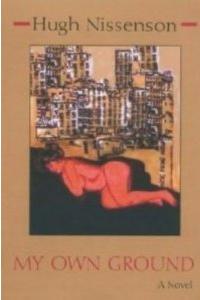 2. Hugh Nissenson’s first novel, My Own Ground (1976), a 181-page tale of a 15-year-old orphaned immigrant, Jake, in the Lower East Side of 1912.
I first discovered Nissenson through The Tree of Life, his amazing 1985 novel of the Ohio frontier. Since then I’ve read Days of Awe, a tender 9/11 novel, and The Song of the Earth, a futuristic fable about a genetically engineered artist. Nissenson’s books roam through time and place. He’s deliberately, perhaps obsessively, innovative, so that he’ll take you into what seems like a generic tale and then bend all of the conventions. Two of his major works include his own strange illustrations, supposedly created by the protagonist. Yet, through all these experiments and variations, his preoccupation with morality and violence remains constant.
In My Own Ground, Jake gets involved with protecting beautiful young Hannele, a rabbi’s daughter, from the pimp who is after her; but Hannele’s self-destructiveness complicates matters. Other characters include a Russian revolutionary who tries to raise Jake’s political consciousness. Though there are plenty of vivid details about immigrant life on the Lower East Side, and even time for a digression or two, Nissenson compresses transitions and omits nearly all of Jake’s self-reflection. For a first-person narrative there’s surprisingly little of the personal in Jake’s fact-driven account; author and narrator let us draw the conclusions ourselves, as in this simple description of Jake’s job and his coworker:
I got eight cents for pressing a tweed jacket and a woolen skirt. The iron weighed fourteen pounds; it was one of those things you knew. I used two of them. There was always one heating up on the stove. I worked at a big table opposite Spiegel, another presser, who’d been at it for six years. His right shoulder was three inches lower than his left; the forefinger of his right hand reached his knee.
“What is it?” he asked me Wednesday afternoon. “What’s the matter with you?”
“Nothing.”
I’d been staring at him. He turned a skirt without pleats inside out, spread it on his board, covered the seam with a strip of canvas, and then reached into the tin pail on his right, squeezed the water from the brown sponge and swept it up and halfway down the canvas, leaving a wet trail. It went on and on: a continuous movement of the lowered shoulder, the elongated arm, the hand wrapped in a wet rag. I saw the swollen blue veins on the inside of his wrist as he tossed the sponge back into the pail. When he picked up the iron, he grunted “Oy” under his breath, and a drop of sweat from his temple ran down the left side of his face; another hung from the tip of his nose.
On the way home, I bought a pack of Tolstoys—ten cigarettes for a nickel…
No comment on the implications of Spiegel’s work, minimal transition away from the scene. Perfect. Nissenson deserves more attention as one of our best novelists; I’m eager to read his latest, The Pilgrim, set in 1622.
3. Farthest North by Todd Balf, a short digital history of Elisha Kane’s disastrous 1853 Arctic voyage in search of the lost Franklin expedition of the 1840s.
As a committed armchair adventurer, I enjoyed this brief—and cheap ($1.99!)—tale of derring-do and unlikely heroes. A sickly sort from a prominent family, Kane drove himself to extraordinary feats. Balf writes some crystal-sharp prose in describing the otherworldly Arctic landscape, the jagged cliffs of ice, the myth of an Open Polar Sea to the north beyond the claustrophobic bergs. Here, though, the need for compression—the publisher’s requirement, I suppose—means that Kane’s background and psychology receive less development than I would have liked. I’m curious to learn more about his love affair with Maggie Fox, one of the three spiritualist Fox sisters of the mid-nineteenth century. Maggie was the one who renounced her séances as fake, and then, after Kane’s death, retracted her confession and went back to conning people. I’d also like to know more about some of the subsidiary characters on the expedition, both those who survived and those who didn’t. But for $1.99, I’m not complaining; Balf has done a fine job with this short-form bio-saga.
The Stockholm Syndrome in Fiction?
May 15, 2012

The original Stockholm hostages
My alter(ed) ego, as part of his role in hosting a fiction series at Philadelphia’s Musehouse, has been reading new novels by two interesting authors. Liz Moore’s Heft (W. W. Norton) focuses on a housebound ex-professor who weighs more than 500 pounds—a grotesqueness that I thought would put me off. Overall, there are too many characters in contemporary fiction who don’t resemble anyone I know. It turns out, though, that hefty Arthur Opp isn’t grotesque at all, not in ways that count; he’s extremely human and decent and has a fine appreciation for the finer things in life, including but not limited to crab rangoons (“a crunch followed by lush bland creaminess”). He’s a good man whose story of lost love and found friendship grows more fascinating as it proceeds.
Very different but equally entertaining is Marc Schuster’s The Grievers (The Permanent Press), the tale of a prep-school graduate who arranges a memorial event for a classmate who has committed suicide. Marc satirizes every institution in contemporary America from schools to banks to chain restaurants, and his main character, Charley Schwartz, is a smart-ass who never had a good intention he couldn’t undermine with stupid comments. But Charley, like Arthur, grows on the reader, and once he has slashed away everyone’s pretenses, including his own, he finds a way to connect with people at the end.
My alter(ed) ego did an interview with Liz and Marc for the Musehouse blog. You can find it here. They will be reading and schmoozing at Musehouse on May 19 at 7:00.
Among numerous interesting points in the interview, one that jumped out at me was Marc’s comment about the dangers of first-person narration:
The temptation is always there to go into a character’s head and talk about things like guilt and regret. The narrator can do something petty or spiteful, and immediately you can have her turning to the reader with an apology. The real challenge, though, is conveying that kind of information without getting too interior. Ultimately, being in the narrator’s head is a bit like a hostage situation. As a reader, you’re more or less stuck with the character, so it’s only natural to experience a degree of Stockholm syndrome.
The implication that having the narrator express guilt can be the easy way out ties in with my previous post on Jeremy Barnes’s The Sense of an Ending. In that Man Booker–winning novel, Barnes does exactly what Marc worries about, and it bothered me so much that I felt the reverse of the Stockholm syndrome—the narrator’s whining about his guilt distanced me rather than increasing my empathy.
I say this as the author of an entire novel, McAllister’s Fall, predicated on a man’s guilt. In that book, the protagonist semiaccidentally kills a guy with a baseball bat and spends the rest of the novel clumsily trying to make up for his action (and perhaps making things worse in the process). Maybe it’s proper that it remain unpublished so that I can criticize others’ treatment of remorse without suffering the inconvenience of that emotion myself.
Inappropriate Guilt?
April 28, 2012
I seem to have misplaced two or three months here.
Blame it on the terrorist puppy, who is now a terrorist adolescent. We surely don’t deserve the behavior to which he subjects us. We aren’t in that superindulgent class of dog parents who give their mutt all-natural raw beef treats and scrupulously avoid the word “no.” Look, our boy doesn’t even have his own Facebook page. And we are firm believers in behavioral limits; for example, when he gets in the bed and wiggles under the covers, he is not allowed to put his head on my pillow and snore into my ear. Limits!
Perhaps I should say that such behavior is inappropriate—the term that has replaced bad, wrong, offensive, etc. It’s the word my 20-some nieces use when a middle-aged man (i.e., over 30) hits on them. I find it a strange word, in part because it connotes such a vague, shifting moral ground. It implies that the behavior might be OK if certain conditions were changed, if the timing were different, if …
Of course, an uncertain moral ground is perfect for fiction writers. Like an adventurous puppy, we like to stick our noses in those sticky, swampy areas. However, a book I just read makes me think that in some cases we may overreact to the muckiness by digging too hard and too deep for solid turf.
Think about recent tales that turn on a character’s guilt. Ian McEwan’s Atonement comes to mind—a narrative set in motion by a lie told by a 13-year-old, a nasty falsehood with tragic consequences. The man she accuses goes to jail, gets out only by volunteering for World War II, gets killed in the field. Still, the shameful deed was committed by a barely adolescent girl, in part because of her misunderstanding and wild imagination (she’s a budding novelist), so is it really appropriate (that word again) that she spend the rest of the novel, covering many years of her life, with a pressing need to atone?
 The book I’ve just finished is Julian Barnes’s The Sense of an Ending. In this case the perpetrator of the nasty act is a 20ish young man, Tony Webster, who writes an intemperate letter to his ex-girlfriend who has taken up with his best pal, who later commits suicide. Not till page 161 of 163 do we finally grasp the consequences of this missive. By accident, the letter cursed the two lovers with a miscellaneous semi-prediction of something that more or less happened. As it turns out, the letter prompted the friend to do X, which led to untoward behavior with Y, which resulted in surprise outcome Z (loosely implied in the letter), which occasioned the friend to take the drastic way out of his predicament. We’re asked to believe that, with these truths revealed, the words of his long-ago rant will “forever haunt” Tony. He’s prey to a sharp remorse that, he reminds us, literally means biting again. Luckily he’s old by now, so he won’t be bitten for long.
I find it hard to conceive that a mature adult—and Tony is quite an ordinary kind of guy, as he readily tells us—would be haunted by a culpability established only through a long skein of consequences that verge on coincidence. “Imagine the strength of the bite,” he demands, when he discovers that his angry curses have come true; this “has a shiver of the otherworldly about it,” he claims (p. 151), but I don’t buy it. Regret, yes; stunned disbelief, sure. Everlasting remorse, no.
These two novelists—both British, both Man Booker winners (Barnes for this book, McEwan for an earlier one)—seem to be reaching for sins their characters can feel guilty about. McEwan’s attempt is more convincing, since the consequences are more direct. Still, I want guilt to be purer and simpler, rawer, less intellectual.
Thus an aphorism: Guilt without appropriate guiltiness is inappropriate.
The Mystery of Alice and Her Brothers
February 2, 2012

“Henry James was drunk.”
So begins an entertaining literary mystery by Paula Marantz Cohen, What Alice Knew (Sourcebooks, 2010), set in 1888 London during the rampage of Jack the Ripper. Cohen’s animating conceit is that the baffled London police call in the famous American psychologist-philosopher William James for consultation. This puts William in the same city as his brother, the novelist Henry, and their sister Alice, a professional invalid, and the three collaborate in the investigation.
The notion of police employing a psychologist/spiritualist/weirdo is commonplace now, at least in fiction. On TV there’s the popular series The Mentalist, among others. In print, Caleb Carr’s 1994 mystery bestseller, The Alienist, sets up a team of a psychologist, a writer, and a secretary to investigate a serial killer in 1896 New York.
Cohen’s basic set-up is far from original, then. But her Jameses, as eccentric as they are famous, become as psychologically interesting as the killer they track. Alternating their points of view, Cohen allows each to contribute a unique perspective to the investigation. The style is fluid, and the dialogue sparkles. Minor characters like Oscar Wilde and John Singer Sargent step in to enhance the ambiance. Sly humor undercuts the characters’ pretenses, especially Henry’s; the poor chubby aesthete never quite recovers from that classic opening line.
After the recent speculation on the Jameses, Cohen could have made their own relationships as lurid as the Ripper’s slashings. It’s to her credit, I think, that she does NOT put William in bed with Alice, Henry with the male artists’ model, or Alice with her devoted live-in companion. Cohen’s Jameses flout Victorian convention only in their unconventional thinking, which in itself offers plenty of sizzle for this fine novel.
A few announcements to conclude this post:
- The second installment of my story “End of the Ride” is up at The Piker Press. In place of similar annoying advertisements for the third and fourth parts, I’ll direct anyone who’s interested to this link to a page that should list each section as it becomes available.
- My story “MG Repairs,” which came out in Carve Magazine in 2010, will be included in the magazine’s 2009–2010 Anthology. Why two years late? Because editor Matthew Limpede has a sensible approach to the absurd rush of our lives. Myself, I favor setting the clock back to 1993.
- My novel The Shame of What We Are is now available as an e-book from Amazon and Barnes and Noble. Everybody who’s not reading it in paperback can now not read it on a screen as well. But they’ll be missing the wonderful illustrations by Tom Jackson, which come out surprisingly well in the e-book.
- “Wright has found a way to wed fragments of an iconic America to a luminously strange idiom, eerie as a tin whistle, which she uses to evoke the haunted quality of our carnal existence.” So said The New Yorker about poet C. D. Wright, who will be reading on February 2 at Villanova University’s Literary Festival. I love tin whistles. Complete info. about the festival, which will include William Kennedy and several other luminaries, is available here.
 The News from Gridleyville