
Remembering the Important Things
April 24, 2011
She may have forgotten what ravioli were; she could no longer write beautiful notes as she once had; she couldn’t concentrate enough to read or even watch TV. She talked about two husbands when she only ever had one and she sometimes thought she still had a baby.
Yet, says Lisa Meritz in this essay about her mother, the senile old lady remembered the things that were most important to her. What were they?
To find out, you’ll have to read the original piece, “Selective Memory,” in Philadelphia Stories. I’ve been telling people this story for the past week, and if I’m getting that much conversational benefit from it, I ought to direct people to the author’s original. It’s worth reading, I guarantee.
Tiger Moms and Orchid Kids
April 23, 2011
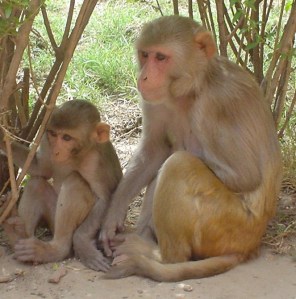
- Tiger mom and orchid child?
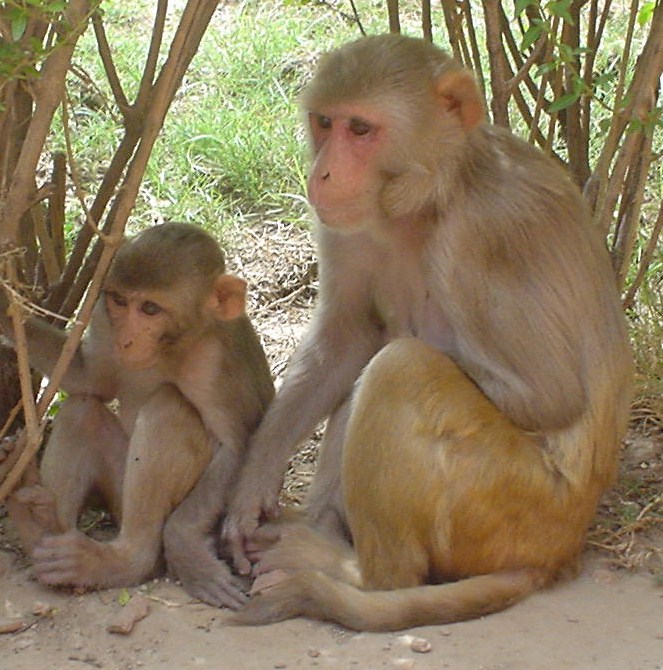
After the recent flap about so-called tiger moms who drive their children to achieve no matter what emotional turmoil it entails, it was interesting to stumble across a December 2009 Atlantic article by David Dobbs about the complex links between genetics and behavior. Though that issue probably littered our dining-room table at some point, my days of keeping up with magazines are long past, and I missed the piece when it was new. However, I’m heartened to think that in this one area I’m less than a year and a half out of date. (Don’t ask about my musical tastes or fashion sense.)
Dobbs first lays out the genetic theory of “vulnerability” that has become part of our cultural consciousness—the idea that some gene variants predispose us to specific diseases. Applying this to psychological maladies, he points to research indicating that certain genetic variations, such as one governing serotonin processing, enhance our risk for depression, anxiety, drug addiction, etc. These genes interact with the environment, so that the malady occurs “if, and only if, the person carrying the variant suffers a traumatic or stressful childhood or faces particularly trying experiences later in life.”
Then Dobbs goes on to develop a newer idea:
Recently, however, an alternate hypothesis has emerged from this one and is turning it inside out. This new model suggests that it’s a mistake to understand these “risk” genes only as liabilities. Yes, this new thinking goes, these bad genes can create dysfunction in unfavorable contexts—but they can also enhance function in favorable contexts. The genetic sensitivities to negative experience that the vulnerability hypothesis has identified, it follows, are just the downside of a bigger phenomenon: a heightened genetic sensitivity to all experience.
This point leads to a metaphor distinguishing two types of children: the “dandelions” who do pretty well regardless of circumstances, and the “orchid” children “who will wilt if ignored or maltreated but bloom spectacularly with greenhouse care.” The startling idea here is that the SAME genes that make us vulnerable to neurosis or psychosis also make it possible to achieve great success. Supporting research comes from studies of both children and rhesus monkeys—the rhesus being the only other primate that shares humans’ adaptability to new environments. The reasoning ultimately reaches the conclusion that our “risky” genes endure because natural selection, far from working to eliminate these traits, actually favors them:
a genetic trait tremendously maladaptive in one situation can prove highly adaptive in another.… To survive and evolve, every society needs some individuals who are more aggressive, restless, stubborn, submissive, social, hyperactive, flexible, solitary, anxious, introspective, vigilant—and even more morose, irritable, or outright violent—than the norm.
I think of John Adams, the second U.S. president, who was apparently so bipolar that at certain key moments he froze into inaction; but when he came out of the funk and got to work, he was extraordinary.
So what does this mean for tiger mothers versus liberal, child-centered, nicey-nicey Dr. Spock mothers? Amy Chua, whose memoir and Wall Street Journal article set off the controversy, has raised high-achieving children by, she tells us, not settling for less. Screaming at the kids, insulting them, threatening, forcing them do what they hate (practice the violin, for instance)—all of these techniques are within bounds for Chua. Should we conclude that, if her daughters have “orchid”-type genes, their overstressed, abusive childhood will eventually make them socially or emotionally disturbed?
Maybe not. In his works on education, Parker Palmer emphasizes that various instructional “techniques” may work, but the sine qua non is “teaching with heart and soul,” connecting with your students and also with your own spiritual self. A key to Chua’s approach, if we can believe her, is that she does in fact connect with her kids; they never doubt how much she cares about them. Contrast this with a tolerant, permissive, but emotionally distant parent—which type is more traumatic for the child?
I suspect that the unengaged type, the skittish kitty mom who’s too distracted to pay attention, or the tomcat dad who’s never home, is far more dangerous to youthful psyches than a tiger parent.
And—to return from felines to plants—if the characteristic of orchid children is their sensitiveness to different conditions, we might also suppose that they are (a) highly variable among themselves and (b) attuned to small variations in the environment. What looks on the surface like a harrowing childhood to you or me may not be so damaging to some orchid kids who thrive on tiny but well-placed raindrops of affection.
As the saying goes, it takes all kinds, and now the geneticists agree. Still, I never want to take a music lesson from Amy Chua.
Crossing Borders, Fictionally
April 9, 2011

Recently I went to an interview and reading by Elise Juska, author of three novels published so far and a fourth almost complete. Afterward, since I hadn’t yet read one of her books, I used my new Nook to download One for Sorrow, Two for Joy, the story of a woman who walks out of her uninspired marriage and then spends the rest of the novel trying to figure out what to do next. Though I got a bit impatient for something to happen, I admired the writing style—vivid but not flashy—the depth of the characters, and the play with multiple languages (American, Irish, academese, and crossword-puzzle-ese).
Talking about her novel in progress, Elise mentioned that, for the first time in her work, a male character is becoming one of the central figures. He’s also 63 or 64, I think she said, a good deal older than Elise herself, and she was working hard to imagine this guy’s life and mentality.
The comment got me thinking about the many borders that fiction writers need to cross. Unless we want to write book after book about people exactly like us, we’re forced to stretch our imaginations into regions we don’t know firsthand. Well, maybe Hemingway knew a lot firsthand, but most of us haven’t been involved in a foreign civil war and two world wars, hung around with bullfighters, shot big game in Africa, and gotten soused in Cuban bars.
For me, the gender border, about which Elise was concerned, is among the easiest to pass over. I don’t know why, but a woman’s POV seems not that difficult to imagine, and so far none of my female friends has chastised me unduly for failing to understand female characters. Of course I haven’t a clue what makes my wife tick, but that’s different.
Class and ethnic borders are much tougher for me. Say, for instance, that my plot needed a tattooed tough guy from Chechnya who dropped out of school at age eight, helped bomb Russian military outposts, then fled to America to join a crime gang. I could probably describe him externally. (Let’s see, try Googling “Chechen tattoo”? I think he has to be bald, right, with a close-cropped fringe? Raw-boned, smooth-shaven face. Six-one, waist size 40? Slightly faded red T-shirt. Uh-oh, I think we’ve created a stereotype.) Getting inside his head, though, would be tricky; even after a lot of reading about every related subject, I might end up with a miscellaneous bunch of traits rather than a whole, breathing, cussing character.
When ethnic boundaries become “racial” ones, we also face social/political restrictions, real or imagined. Not being a Native American myself, do I dare use one as a main character? Even if I think I can understand him or her, would I be transgressing? How much should I care?
Oddly, too, borders of place are hard for me to cross, even in our globe-trotting times. It’s not the look of a far-off place that’s the problem; it’s understanding what it feels like to be there every day. If I lived in northern Siberia for a year, how would the cold and darkness affect my psyche? What does the Arizona desert smell like to someone who’s been there her whole life? If I stayed for a decade in the Northwest, would the rains depress me, fertilize my brain, or merely make me guzzle more coffee and start a garage band?
It’d be interesting to hear from a number of fiction writers about the metaphorical borders that trouble them most. As for Elise’s concern about her 64-year-old male, I think she can safely assume there’s an infinite variety of individuals in that category, probably even some bald Chechens. Her bountiful imagination is the only visa she needs.
Straws, Camels and American History
March 26, 2011

The author, metaphorically (photo by Jjron, from Wikipedia)
During the periods when I’m working too hard, which occur far more often than they should—a form of self-flagellation because, as my wife points out, no one required me to accept so many large jobs—a “last straw” feeling often overtakes me, the sense that, like the proverbial camel, I can’t manage one single additional task, no matter how tiny, or I’ll snap. Can I figure out why the copier insists it’s jammed when there’s nothing visible stuck in it? No, I can’t, not another chore, there’s just too much, it’s impossible, ask me next month or next year, or trash the damn thing, I don’t care, but I can’t spend five minutes on it, I can’t possibly do one more thing…
Of course I know this is nuts, a result of overstress, a psychological imbalance, and when the work eases a bit, I recover my good humor and willingness to delve inside the copier in search of a stray paper clip.
Yet the more I look around at our culture, the less unusual my fits of stress seem to me. Not only do we have crazies who have gone well beyond the snapping point—the ones who shoot up malls or schools—but we sprout flaming lunatics on the radio and in Congress, nasty snipers on the Internet, road rage on the freeways… So many of us seem just two or three straws from the breaking point.
Lately I’ve been sampling advance proofs for a forthcoming book from Temple University Press, American History Now, edited by Eric Foner and Lisa McGirr, a volume that attempts to sum up the ways current historians view major eras and themes in the nation’s history. The main audience, I assume, is scholars from other fields who want a brief overview of what the historians have been up to lately. A chapter by Kim Phillips-Fein of NYU takes on the near-impossible challenge of summarizing recent scholarship on the era defined as “1973 to the Present.” The post-1973 years, she writes,
have been viewed as a time of economic uncertainty and widening inequality as compared to steady growth; as an epoch of ambivalence, skepticism, and even hostility toward politics, in contrast to the idealism and optimism of the 1940s, 1950s and 1960s; and perhaps most of all, as an age of conservatism that rejected the liberalism of the postwar years.
Of course, economic uncertainty, inequality, and even skepticism are hardly unique to our era; these are recurring themes throughout the country’s history, dating to before the Revolution. What’s different now, I think, is that we’ve become terribly anxious and insecure—more so, for instance, than in the 1950s when we had Joe McCarthy, nuclear bomb scares and sheriffs clubbing civil rights leaders; or in the 1960s, when we killed two Kennedys, Martin Luther King, Malcolm X, hundreds of thousands of Vietnamese and tens of thousands of our own soldiers. Is it 9/11 and terrorism that have made us so jittery, brought us so close to the edge?
I think it goes deeper than that. The “economic uncertainty” that Phillips-Fein points to probably plays a role. We got accustomed to being prosperous, and now that we seem to be running faster and faster merely to stay in the same place—those of us who still have jobs, that is—we lack the emotional resilience to handle the situation. Then there are the many social changes we’ve absorbed in a few short decades. It’s great, for instance, that we can define a “family” in more ways than before, so that two adults of the same sex with three adopted children from various countries are as much a family as any other; yet all of our families, old-fashioned and new-, have become fragile, with divorce rates approaching 50 percent for first marriages and soaring far above that for second and third marriages. (Luckily, by the time you have a sixth wedding like my father, your life will probably end before your marriage.) The best way we’ve found to reduce the divorce rate is for couples not to marry in the first place, a solution that doesn’t do much for psychic stability and calm.
It’s a truism that, after all the gains made by women and minorities in the past decades, we have plenty of stick-in-the-muds uncomfortable with such change, or worse, severely ticked off about it. Yet I also wonder if our recent social advances make the gainers themselves feel more secure. If you’re a minority person in a corporate position previously closed to those of your ethnicity/gender, does your triumph bring peace of mind, or does it give you one more thing to worry about?
It’s my theory that such economic and social conditions have produced a long-running, low-level anxiety that is always with us, magnifying our personal and public stresses and bringing us closer to the snapping point. You might test this idea next time you’re in a traffic jam. Doesn’t one part of your psyche wish you could whip out an assault rifle and start shooting?
Being untrained in psychology, social science, history and just about every other subject matter, I’m totally unqualified to form such opinions. But this too is a prevailing American characteristic, the having of strong, unfounded convictions. There’s a reason bigoted talk-show hosts are popular.
… Oh hell, dammit, the smoke alarm over the stairwell started beeping again. I changed the battery two weeks ago! Now I’ll have to search for another new battery, fetch a ladder from the basement, climb up there and perch precariously while I try to fix the thing with clumsy fingers—or else drive to the hardware store and buy a new alarm, maybe the whole thing is defective—but that store sold me this cheap junk in the first place—no, it’s too much, dammit, I can’t take this anymore! Gimme a broom, I’m gonna knock that stupid piece of crap off the ceiling, take it out on the porch and jump up and down on it till it’s a thousand plastic splinters…
There! Whew! Now I feel better. I’m leaving the shards on the porch to teach all goddamn smoke alarms a lesson.
What was I saying?
The Literary Hibiscus: A Complaint About Symbolism
February 19, 2011
Back from the near-dead. Seventy-hour work weeks, snow, freezing temperatures, lack of sun, topped off by a virulent head-and-chest virus that apparently laid waste to Baltimore before attacking Philadelphia—all have made this a miserable winter. Granted, we’re sissies here in the mid-Atlantic, and I admit that I could never live in Minnesota, even if Garrison Keillor dropped by nightly to tell stories. Still, I enjoyed pitying myself, and if this is the only happiness one gets for months at a time, that qualifies as misery, doesn’t it?
In these lost months I’ve managed to read just one book, Chimamanda Adichie’s first novel, Purple Hibiscus. I haven’t yet tried her second novel, Half of a Yellow Sun, or her story collection, The Thing Around Your Neck.
Purple Hibiscus, as the reviewers said, is a classy debut. Though the background is the Nigerian political scene, the focus is on a single family with a domineering father, passive mother, and two children trying to cope with the impossible situation created by the parents—something that should hit home for me, since I’ve written an American novel with the same setup. And I did respond acutely, enjoying even the long stretches when it seems the teenage narrator-protagonist, Kambili, will never get up the gumption to strike out for freedom from the oppressor. Adichie gives her characters enough complexity to challenge our simple presumptions: the abusive father has many good points, and the more attractive characters, while never verging on evil, have quirks to keep us interested.
She’s good at description, offering simple but vivid detail about daily life:
Obiora was pounding a yellow mango against the living room wall. He would do that until the inside became a soft pulp. Then he would bite a tiny hole in one end of the fruit and suck it until the seed wobbled alone inside the skin, like a person in oversize clothing. Amaka and Aunty Ifeoma were eating mangoes too, but with knives, slicing the firm orange flesh off the seed.
And a moment later, when flying termites course past the apartment complex:
The air was filling with flapping, water-colored wings. Children ran out of the flats with folded newspapers and empty Bournvita tins. They hit the flying aku down with the newspapers and then bent to pick them up and put them in the tins. Some children simply ran around, swiping at the aku just for the sake of it. Others squatted down to watch the ones that had lost wings crawl on the ground, to follow them as they held on to one another and moved like a black string, a mobile necklace.
It helps that the scenes are exotic to Western readers. We can read a sentence like
Lunch was jollof rice, fist-sized chunks of azu fried until the bones were crisp, and ngwo-ngwo.
with a fascinated hunger that we might not feel if the ingredients were more familiar:
Lunch was baked beans, fist-sized chunks of breaded chicken deep-fried until crisp, and cole slaw.
Still, the power of description is in the vivid, accurate details, and Adichie gets those right—as far as this Western reader can tell. (The azu does sound good, whatever it is. Wikipedia says it’s a Japanese R&B singer.)
The one crispy bone I have to pick with Adichie concerns the purple hibiscus, the title flower. In the novel’s extended family, Aunty Ifeoma, the liberal, liberating force, happens to grow an unusual purple hibiscus that her neighbors all admire. The narrator’s brother, Jaja, takes some of Ifeoma’s purple flowers to plant in the garden by his own house, and soon afterward he plucks up the courage to defy his father. At the end of the first section, the narrator makes sure we see the connection: “Jaja’s defiance seemed to me now like Aunty Ifeoma’s experimental purple hibiscus: rare, fragrant with the undertones of freedom. … A freedom to be, to do.”
I’m on a bit of a crusade against standard literary devices, which seem to me all too pervasive in contemporary writing, and this kind of heavy-handed symbolism, which I suspect Adichie absorbed from evil Western influences, ticks me off. The innocent hibiscus plant itself plays little role in the novel; it’s there just to be loaded down with symbolism. Let it go free, I say, free from the burden of representing freedom! Liberate it from the novelist’s manipulation. And don’t make those flying termites into symbols either. If you build the meaning into the action, the characters, the setting—as Adichie has done so admirably—we readers don’t need symbols as a side dish with our crispy azu.
Fundamentals
January 11, 2011
 “Oddly, I may have less of a clear and distinct sense of myself now than at any time in my life. Even odder, I do not find this especially disconcerting, since it seems perfectly in harmony with how I have come to look upon life and the world: as things we do not come near to understanding, for all our philosophy and science. I have become enthralled over how unanswerable the fundamental questions of being are.” —from Frank Wilson’s column at When Falls the Coliseum
Holiday blues and greens
December 30, 2010

Relatives enjoying Christmas appetizers at the Gridley residence; note high-class footwear and napkins
The week between Christmas and New Year’s has long been for me a time of increasing sadness. The feeling goes back, I suppose, to the childhood malaise when all the presents have been opened, explored, exhausted, their magic reduced to mundanity, and a new trove of toys can’t be expected until one’s birthday. Partly, too, it’s the letdown after any big festivity, especially one accompanied by too much food.
Yet by the time I’d reached my thirties, I was also sensing a difference in character between the two holidays that bookend the Ameri-Christian winter celebration. For all its commercialization, Christmas remains a family day, when you hug relatives you barely remember and enjoy the warmth of an extended clan along with Aunt Kay’s mince, apple, pumpkin, and lemon meringue pies. (How did she ever bake so many?) New Year’s Eve, in contrast, is the quintessential party/dating time, the night of silly noisemakers when we get dressed up, get drunk, and strive to get laid. For a wallflower who was terrible at drinking and partying, the choice was clear. Christmas I loved; New Year’s I detested. All those people having fun on New Year’s—I looked down my bumpy, nerdy nose at them.
Moreover, to the extent that my secular soul could be moved by religious images and music, I always found the tale of Christ’s birth and death haunting and poignant, and this added to my enjoyment of Christmas. New Year’s was empty revelry, with no redeeming content. Party hats, streamers—bah, humbug.
Recently it occurred to me that Judaism puts its important days in a better order. The High Holy Days in the fall start with the New Year and slide inexorably toward Yom Kippur, the day of repentance, so that, in a sense, you end the holiday season on a downer. But it’s a meaningful downer, and after fasting, confessing, and perhaps participating in all five traditional prayer services, you should feel enlightened and unburdened. Unlike Christians, who exit the holidays with a hangover.
In an attempt to bring a serious note into New Year’s, then, I’ll quote from my favorite Christian holiday lyrics, which mix Christmas and New Year’s references in a philosophical blend. In his review of a recent Piffaro concert, Tom Purdom mentioned how much he admired these sixteenth-century verses. To the tune of Greensleeves:
The old year now away is fled,
The new year it is enterèd;
Then let us now our sins downtread,
And joyfully all appear.
Let’s merry be this day,
And let us all both sport and play.
Hang grief, cast care away.
God send you a happy new year!The name day now of Christ we keep,
Who for our sins did often weep.
His hands and feet were wounded deep,
And his blessèd side, with a spear.
His head they crowned with thorn,
And at him they did laugh and scorn,
Who for our good was born.
God send us a happy New Year!And now with New Year’s gifts each friend
Unto each other they do send;
God grant we may all our lives amend,
And that the truth may appear.
Now, like the snake, your skin
Cast off of evil thoughts and sin,
And so the year begin:
God send you a happy new year!
The Importance of Place
December 18, 2010
Years ago, when I was reading a lot of Western writing—meaning books by authors of the American West, not genre “Westerns”—there was much talk about the importance of place in literature. This somewhat vague concept includes not just the physical attributes of a place but the meanings humans bring to the locale. American writers of the twentieth-century West became especially sensitive to place and its implications. Why? Several reasons come quickly to mind:
(1) Western writers shared a sense of outsiderness, feeling isolated from the supposed cultural centers of the East. For them, making place important was a form of self-assertion.
(2) Western landscapes are so dramatically different from those of the East—often harsh, dry, empty—that it seems they must intrude on a story, affecting the thoughts and emotions of the characters.
(3) Some Western experiences just don’t exist in the East. In Vermont you’ll never encounter a grizzly bear or a surfer, unless s/he’s on vacation.
(4) Because of Western geographic and climatic conditions, patterns of settlement differ. Could a suburban Connecticut tale, with neighbors right next door, be transplanted to a desert region of Arizona where you have to drive an hour to find a dentist?
(5) The West, being the new region, lacked the traditions of the East. It had little history, at least as far as Euro-American settlers from the East were concerned, and much of its real history was soon distorted into myth. Hence it was a locale, as Gertrude Stein remarked of Oakland, with no there there. Western writers focused on the sense of place in part because of the lack of human depth to their place.
(6) With open land for the taking, the West is where our migrants traditionally headed, and once there, they typically kept on moving. Even in the late twentieth century it was a territory where humans seemed more restless than mountain goats. Again, Western writers sensed what was missing, the deep rootedness that comes from staying in one spot for year after year, slowly changing with the neighbors, the growing tree in the backyard, the buildings that rise and fall, the succession of tragedies and comedies that give a place its character.
That last point resonates with me personally. My own family, like the Dennisons in my novel The Shame of What We Are, bounced around the East Coast until I was about eight, then skipped across the continent to southern California, where we continued bouncing and skipping. If that sun- and smog-blasted area could ever have felt like home to me, my family’s continuous uprooting made that impossible. The experience has been shared by many Americans, for whom dissatisfied wandering is a quintessential characteristic:
“Indifferent to, or contemptuous of, or afraid to commit ourselves to, our physical and social surroundings, always hopeful of something better, hooked on change, a lot of us have never stayed in one place long enough to learn it, or have learned it only to leave it.”
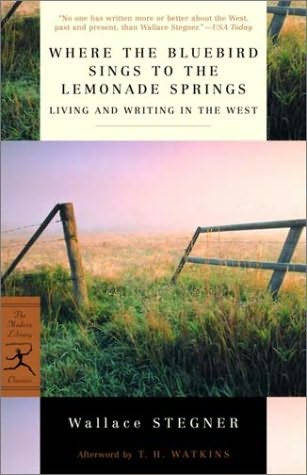 That’s Wallace Stegner in “The Sense of Place,” an essay included in his 1992 collection Where the Bluebird Sings to the Lemonade Springs. He also quotes Wendell Berry’s famous line, “If you don’t know where you are, you don’t know who you are.”
These matters came to mind the other morning when, stumbling up the sidewalk on my way to work, I noticed a neighbor decorating her sidewalk tree. In our ultra-urban locale, holiday decorations tend to be muted. First off, if you put a Santa on your stoop, someone will steal him, which might bring a lawsuit by the elves for reckless endangerment of an icon. (Certainly the elves have powerful sway over the politicians and mega-lawyers downtown; there’s no other explanation for much of what happens here.) Second, since the houses are three stories high and joined to the neighbors’ in a block-long row, the notion of stringing bulbs or reindeer across the roofline is best left to a few crazy drunks or professional roofers. Even the people who bang on your door after a snowstorm and offer to shovel the sidewalk for $5 do not offer to hang Christmas lights.
So it was unusual that my neighbor—I’ll call her Martha—would be decking an outside tree, and her style of doing so seemed even less common: a three-foot cone of green boughs around the tree’s base. Insensitive as usual, I teased her that she was perverting nature by turning the poor maple upside down—bare at the top, pine-green at the bottom. Martha explained that she and her daughter had seen holiday decorations like this on a trip to Vienna, and they had agreed to do something similar at home. The daughter had taken photos as a reminder.
When I made it to the office and slurped my second cup of coffee, an appreciation of this slight interchange began to dawn on me, and it had to do with a slowly emerging sense of place. After the dozens of relocations of my early years, I’ve become firmly rooted in this neighborhood, so much that I don’t even like to leave for vacations. Though writer friends go away on “residencies” at “colonies” or “centers” in order to escape the daily mess and concentrate on their work, I’ve no interest in doing that. My only request is that someone get my daughter’s dog to stop barking at the empty sidewalk. (Shut UP, Alfie!)
Thus I could fit Martha’s behavior into its social and environmental context in a way not possible in my wandering early years, when I was always a tourist. I could smile about bringing a taste of aristocratic Vienna to working-class Fairmount, Philadelphia. More important, though, was the personal context, and that’s the crux of this tiny story.
Martha’s daughter, who had traveled to Vienna with her and taken the souvenir photos of the outdoor trees, died this past summer. A woman in her thirties with a young child. A mysterious stroke, then another, then a diagnosis of a cancer that had supposedly precipitated the strokes, then debilitating chemotherapy, then weeks of bedridden suffering, then another stroke that killed her.
Martha and her husband had been devastated by their daughter’s quick decline. Clearly the sidewalk tree, with its small tepee of greens and a ribbon near the top, was a memorial. Martha didn’t have to say that, and I didn’t remark on it. But I understood and appreciated, and she knew that I did, and this constituted a brief and very human moment in our cold winter season.
In its essence, the sense of place is about this sort of connectedness—to the environment, the society, the neighborhood, and most of all the people. Architects and planners have latched onto the concept, and there’s even a blog about it by Marilyn Finnemore. But I’m still not very good at connecting; distracted, hurried, impatient, I walked past Martha’s tree several more times before noticing it again.
My lifelong symptoms of displacement are widely shared by Americans, I suspect, even those who weren’t hauled from place to place as children, and I worry about what this means for our cultural future.
SHAME on Saturday
December 1, 2010
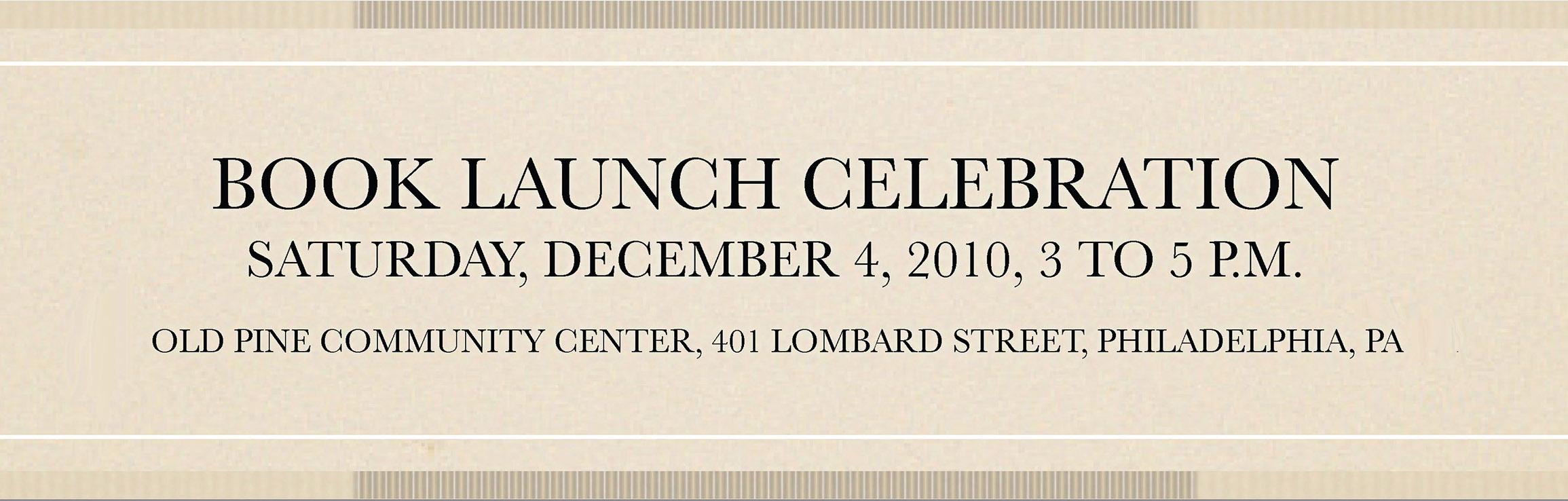
Click image to enlarge
It’s not such a bad day usually, Saturday, and for some it’s even a sabbath,* but this coming one, December 4, will be smudged by the official launch of my novel, The Shame of What We Are. The publisher is planning a joint celebration with Sowilo Press, which is launching my friend Debra Leigh Scott’s marvelous collection Other Likely Stories. Everyone who occasionally reads a book is welcome to stop by.
Debra’s book picks up in the 1960s, where mine leaves off, and ends with the fall of Saigon in 1975. Together the two books portray a troublesome quarter-century in American life, when we engaged in a nuclear arms race; persecuted our own citizens; fought in mysterious places in Asia; assassinated political leaders; invented, perfected, and then (in my opinion) destroyed rock ’n’ roll—and, somewhere along the way, undermined the traditional nuclear family. How much connection was there between public misadventures and private confusion?
I’m told the party will feature live music appropriate to the time period. If it’s disco, I’ll be hiding under a table.
*Which reminds me: Hanukkah has just begun here on the East Coast. To all who celebrate it, or wish they did, have a joyful one.
In All Candor
November 30, 2010
 On my other, more static website, Gridleyville.com, I’ve long concluded the introduction with a joke:
“It should be obvious by now that this website has nothing to do with the hamlet of Gridleyville, situated near Candor, New York. Sam Gridley greatly admires the name of that town but, in all candor, has never been there.”
The pun always makes me laugh rather than groan, which is all anyone needs to know about my sense of humor. As my wife often grumbles, no one else finds it funny.
But, come to discover, the jest has a deeper layer of meaning. It seems that about 1919 the eminent writer and philosopher Kenneth Burke rented a summer cottage in Candor for $5, from a man named Sam Gridley.
Although the price matches my idea of good commerce, that wasn’t I. Nor was it an ancestor of mine, I don’t think. We’ve never had real estate moguls in the family.
But wait, there’s more: In 2007 the U.S. Navy commissioned a ship named the USS Gridley, and it belongs to the Burke class of destroyers.
This is enough for a conspiracy theory.
But the truth remains: I still haven’t set foot in the real Gridleyville. Perhaps I will, though, to see whether the Burkean aura suffuses visitors with a deeper understanding of human nature—and of weird coincidence.
 The News from Gridleyville