
Portrait of a Marriage
May 12, 2014
 Thanks to the excellent Valparaiso Fiction Review for publishing my very long short story, or short novella, or whatever it is, called “Portrait of a Marriage.”
My writer friends sometimes speak of stories that work in “real time,” meaning that the reading takes about as long as the action would in real life. This piece covers 34+ years in the history of a peculiar marriage, and it is not QUITE in real time. An average reader should be able to finish it in 10 or 12 years at most. I promise that, just as in an actual marriage, there are some funny parts to lighten the tedium.
Click on the cover image to go to the table of contents for the issue. Great photo, no?
Literature and the Season of Depression
February 9, 2014
A rambling piece of mine on winter, depression, literature, religion, and my grandmother—how are those subjects linked?—appears as a guest post on the Superstition Review blog:
It talks about books by Lauren Grodstein and Joan Didion, among many other topics. Thanks to Superstition Review for inviting me to contribute.
One Reason I Like Fiction
December 18, 2013
My wife recently read Blue Nights by Joan Didion, a moving memoir about the author’s loss of her 39-year-old daughter. Like many other readers, Peggy admired the book but remained puzzled about what exactly killed the still-youngish woman. The memoir is “a little less than clear on the events that took place.”
I haven’t read the book myself and have little right to comment on it. The link on the quotation above leads to an article that discusses the possible diseases involved and reasons why Didion may have dodged the issue—if indeed “dodged” is an appropriate word for a deliberate decision by a well-respected writer whose recent work has courageously been “turning the scalpel on herself.”
My point here is that, in a novel, the author would not have been able to conceal or evade such a basic fact. If the daughter were a fictional character, readers would demand to know what was going on, and editors would demand that readers be satisfied. Perhaps one could structure a novel so that the mystery itself, the unknowability, became a central theme, but that’s a different question.
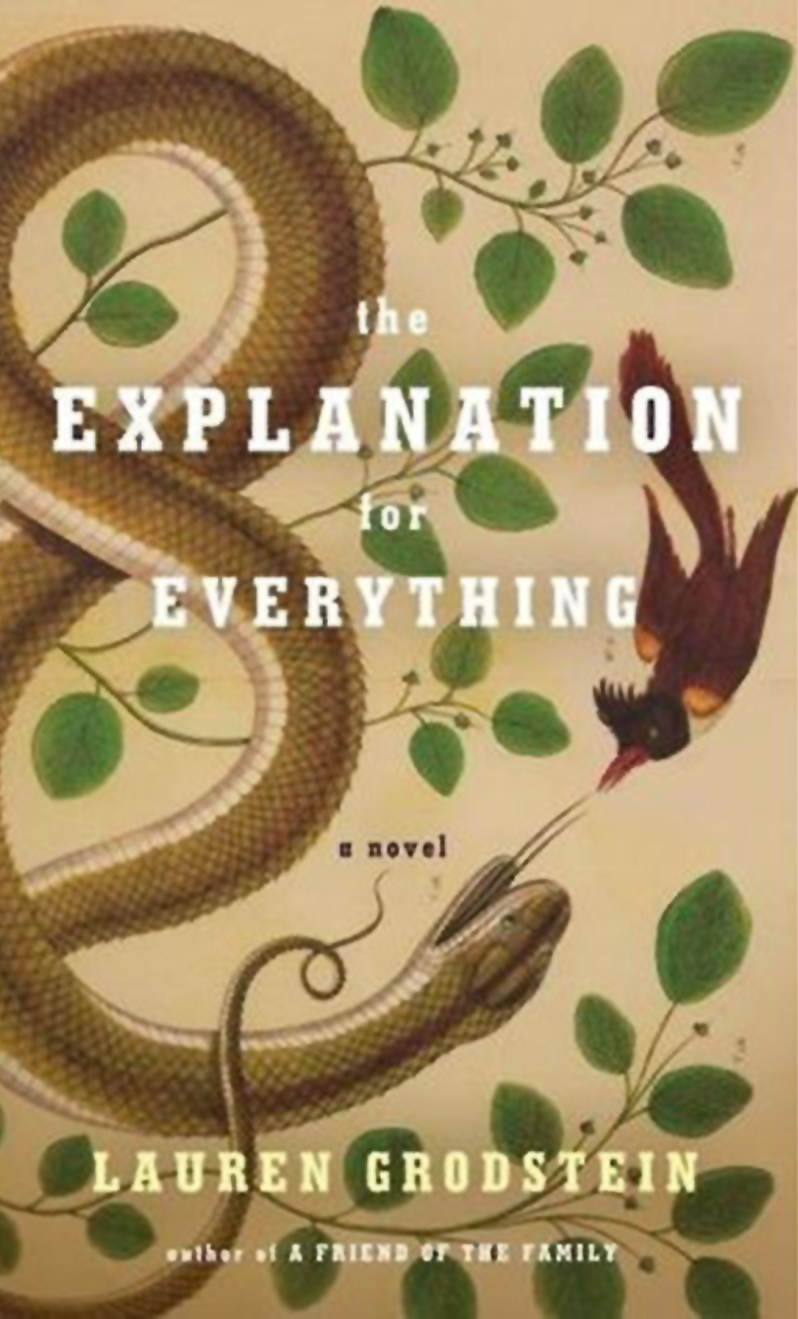 I’ve been pondering this matter in connection with two Philadelphia-area authors who will be reading at Musehouse in January: Lauren Grodstein and Susan Barr-Toman. Both tackle difficult subjects without flinching from the details. Grodstein’s 2009 novel A Friend of the Family centers on a suburban doctor who has clear and reasonable ideas about right and wrong and who gets into deep trouble, personal and moral, when he tries to act on those notions. Her latest novel, The Explanation for Everything, features a widowed biologist whose trust in science is challenged by a student who believes in God. Not the usual pattern of religious faith undermined by science, but the reverse—and though there’s plenty of humor in the situation, the novel takes the challenge by faith quite seriously. The protagonist’s science begins to fail him; his experiments go wrong, and his Darwinist convictions bring him little solace for the death of his wife. Enter a Christian student—a nubile female, no less—who offers both personal and spiritual comfort…
 Susan Barr-Toman’s novel When Love Was Clean Underwear, winner of the Many Voices Project award, was published by New Rivers Press in 2009. It begins with an elderly, terminally ill woman demanding that her live-at-home daughter help her commit suicide. The mother prepares a series of index cards with detailed instructions for each step: “Number One: Place pillow over my face and apply firm but gentle pressure for a minimum of five minutes.” After the suicide/murder in the first chapter, the introverted and now-culpable daughter has to make a life for herself—and that’s the story for the rest of the book.
Most fiction writers choose easier topics, of course. But the genre allows us—indeed, challenges us—to explore the hardest truths in depth, without flinching. And that’s why I think fiction is often truer than memoir, truer perhaps than what we call real life, which for many of us teems with artificialities.
Grunge in the Burbs
June 16, 2013
 Conquistador of the Useless, the first novel by Joshua Isard, teems with references to bands I’ve never heard of. The book is also way too cool to use quotation marks around dialogue. All this should annoy me, but I enjoyed the tale anyway.
The story is told in the first person by Nathan Wavelsky, an early-thirties guy with a boring desk job, a nice wife, Lisa, a new home in the suburbs and a passion for grunge and pre-grunge bands that speak to his alienation. How does a grunge couple end up in the burbs? Well, they left the hip inner city because they got tired of the noise and the hipsters’ pretense. Of course, Nathan doesn’t like the pretense of the suburbs either; he’s immediately snarky about the new neighbors who invite them for dinner:
So, Kristy [the neighbor wife], says, how long have you been married?
Four years, Lisa answers.
That’s wonderful, Kristy says, we’ve been married almost eight years now.
She says it like they’d beaten us at some contest.
That’s typical of Nathan’s sarcasm. There aren’t many people he cares for. What he does like is drinking tea in the tree-shaded quiet of his backyard, bothered by no one. He also loves listening to his music, reading his books. He has no ambitions and doesn’t see the need to develop any. Isard sets him up, in fact, as a prototype of his generation. Here’s Nathan describing himself and Lisa during and after college:
Neither of us were National Merit Scholars or Phi Beta Kappa members—we always studied, but refused to end up in the college’s counseling office because we had anxiety attacks over a B.
This is also the way we treated our jobs. We worked hard in the office, but tried not to think about it when we got home.
It wasn’t that we didn’t aspire to a promotion, it’s that we didn’t aspire to anything. We were the kids who heard their public school teachers tell them that they could be anything, even President of the United States; whose parents insisted that we would be the generation to change the world; who grew up in the age where everyone’s special.
Then we looked at the politicians, our teachers, our peers.
And we said, Horseshit.
And we were happy.
With Nathan thus coasting through life, Isard tosses him some trouble. Nathan’s best friend, who has become a rich adventurer, breezes into town and invites him to climb Mt. Everest. The thought intrigues Nathan because he has always liked climbing mountains (though he has no experience on difficult ones) and because he’s drawn to experiences that are “wonderful and useless.” But a trip to Everest, with the real possibility that he might freeze to death there, conflicts with Lisa’s sudden interest in beginning a family. Nathan finally grasps Lisa’s seriousness about nesting when she starts painting the house by herself and buying new furniture:
We’ve been here for five months, Nathan, and until today we had a hobo’s table next to our couch, a bedroom that makes a summer camp cabin look ritzy, and no plan for any of it. We’ve got a stove, a dishwasher, and a washer/dryer that came with the place because the last owners didn’t want them anymore.
Yeah, I say, but those things still work fine.
Who gives a shit if they work, she says, they’re not fucking ours.
It is, at this moment, that I realize the full gravity of the situation.
Nathan also gets into trouble by lending Vonnegut’s Cat’s Cradle to a teenage neighbor girl, Rayanne, a cultural faux-pas worsened by his indifference to propriety. He is shunned by the adult neighbors, who assume he’s been corrupting minors, and again Lisa is not amused:
What kind of relationship do you have with Rayanne?
The kind where I lend her books and music.
And where you think about how hot she’s going to be.
Oh come on—
Is it also the kind where you invite her into our house when I’m not home?
Yeah, I say, to give her a book.
You didn’t tell me that part of the story, she says, you didn’t tell me she came in here with you. How do you think that looks?
I don’t know, I say, polite?
The humor, as should be evident by now, keeps Nathan amusing even when his unwillingness to be impressed with life becomes profoundly unimpressive. Yet, since this is a Serious Novel, Nathan does at last experience Personal Growth—and though I’m capitalizing these concepts to poke fun at them as Nathan himself might, the end is genuinely moving as well as unexpected.
It’s a good read even if you’ve never heard of Pixies, Green Day, Social Distortion, Mudhoney, Screaming Trees, or Jane’s Addiction. Even better, I guess, if you have.
A Fragrant Tragedy
June 10, 2013
From the opening of Ru Freeman’s ambitious and moving new novel, On Sal Mal Lane, set in her native Sri Lanka, we know that tragedy looms. The Prologue, in italics, sketches the background of the conflicts between Sinhalese and Tamils that erupted into war, and the first chapter of regular text begins in this way:
“God was not responsible for what came to pass. People said it was karma, punishment in this life for past sins, fate. People said that no beauty was permitted in the world without some accompanying darkness to balance it out, and, surely, these children were beautiful. But what people said was unimportant; what befell them befell us all.”
Lest we forget the context, this narrative voice from on high returns from time to time to update national political developments and remind us of the doom hanging over the characters.
Yet the novel’s basic action scarcely ventures beyond the tiny, flower-bedecked, semirural lane of the title, on the outskirts of the capital city, Colombo. The people there form a microcosm of Sri Lankan ethnicities and religions—Sinhalese, Tamils, mixed-race Burghers; Buddhists, Hindus, Muslims, Catholics—all in the space of nine households. Most of the plot centers on the children of Sal Mal Lane, especially the four Herath kids, who are sensitive, talented and a bit more upscale than their neighbors.
Perhaps the novel’s greatest achievement lies in the way it locates significance in the tiniest domestic actions. A wayward teenager, Sonna, quarreling with his father, is denied a birthday party. As a make-do, Sonna’s mother invites the Herath children over for an elaborate dinner without stating that it’s for the boy’s birthday. Later, discovering the truth, the Heraths feel bad that they didn’t take a present. They count out coins from their allowance to buy a chocolate for Sonna, put it in a shiny bag and try to deliver it. He isn’t home, though, so they stash it in their refrigerator to keep it from melting. The next day, Mr. Herath, rummaging for a sweet after lunch, finds the candy and eats it. The children are too abashed to stop him, afraid their mother will find out they’ve been associating with Sonna. Having no money to buy another treat, they reconcile themselves to feeling ashamed, and they let the matter drop.
Ending a chapter, this little tale hovers as a portent. How will the mistakenly consumed chocolate contribute to the slowly unfolding tragedy? This technique encourages the reader to focus on causes rather than on what comes next. For me, though, the weighty foreshadowing has its downside because it discourages page-turning; I was none too eager to arrive at the moment of implosion.
Another potential difficulty is that the profusion of characters makes it hard to become deeply invested in any one of them. Eventually the reader comes to care for several of these people, but it takes a while. Among the Heraths, there are four children of various ages, plus the father and mother. Five other children play significant roles, as do ten or more adults. The interplay is complex, and even the troublemakers and bigots have some redeeming features. The upside is that we get a rich, complex view of a neighborhood, both its uniqueness and its inability to escape the sociopolitical trends that are drawing the larger society into turmoil.
The language is often as fragrant as the blossoming sal mal trees that surround the lane and the spicy curries prepared by the women. In these lyrical passages Freeman’s affection for her homeland shines through. Here’s a paragraph plucked almost at random:
“The gusty wind that dominated a short respite from the monsoons was beginning to tease the children of Sal Mal Lane. It tugged at their school uniforms, inverted umbrellas held against the sun, and combed and recombed their hair, first this way then the other. It whispered stay! stay! to them as they stood waiting for their school buses, shivering in the cool morning hours, a request they tried not to hear. They giggled as their skirts and shirts lifted this way and that, their books fell out of their careless hands, and the ribbons tied into their braids and ponytails, blue and white for the Herath girls, green and white for the Bolling twins, refused to stay in their knots. But each evening the children acquiesced. They put down their books, put on their home clothes, and went outside. They went to fly kites.”
Another treat is the occasional profound remark that could be framed and mounted on the wall. At one point the younger Herath boy, Nihil, seeks reassurance about the rumors of civil war and the announced intention of other boys on the lane to join the army. He questions his friend, old Mr. Niles, who answers: “People do not go to war, Nihil, they carry war inside them.” At times such philosophizing can become a bit heavy-handed, but it serves to reinforce the themes of the novel.
When the long-awaited tragedy arrives, it occurs on two levels. On one level we witness a political event as the quiet street is overcome by the conflict raging around it. But the greater tragedy is rooted in the personal stresses we have seen developing: father vs. son, neighbor vs. neighbor, social outsiders trying to gain a place among those they admire and envy. No one on Sal Mal Lane is entirely innocent. As the second-oldest Herath child, Rashmi, reflects near the end, “Everybody was responsible for what had happened to their street.”
Even as calamity intrudes, however, the people of the lane bond together, across ethnic boundaries. The victims are cared for by their neighbors. The dénouement rekindles a sense of hope, and the novel ends with a young person reading from Malory’s Le Morte d’Arthur, “a tale of striving for high ideals amid human frailty, turmoil, and change.”
On Sal Mal Lane is not a quick read but one to savor, one whose images and ideas will linger in the reader’s mind.
Flash Fiction: An Antitheory
May 14, 2013
Yesterday I was doing some research into the theory of “flash fiction” or “microfiction” for an upcoming event at Musehouse. I spent at least half an hour at it—the most research I’ve done in decades, and it was exhausting. My principal discovery was that theory about microfiction renders me as drowsy as other literary theory. Beyond that, however, meticulous googling did turn up a couple of interesting tidbits from a journal called Short Fiction in Theory and Practice. Both items are from the 2011 inaugural issue, which is offered for free online. (There’s no need to waste croissant money on research.)
One notable idea comes from Ailsa Cox in the journal’s introductory editorial:
“Short story theory is unique in that it emanates almost entirely from its practitioners.”
I’m not sure I believe that—there’s still a large element of “those who can’t do, theorize” in academic literature departments—but if it’s true, it’s a nice trend. Yet if writers are indeed developing “a more sophisticated awareness of the methodologies available to practice-led research,”* as Cox believes, I hope they’ll use livelier language to explain their discoveries.
The other item of note comes from an essay by Ursula Hurley that focuses on Joyce’s Dubliners. She argues, citing Joyce Carol Oates, that short fiction differs from longer work in that it requires the “active participation of the reader.”
“What I am getting at here is that the genre itself, the very nature of the short story, means that the three-dimensional wrap-around fictional dream of the realist narrative is much less likely to occur. Short fiction gives us glimpses and fragments of fictional realities, where the reader uses their own resources** to reconstitute a richly detailed world from the concentrated stock that the narrative provides.”
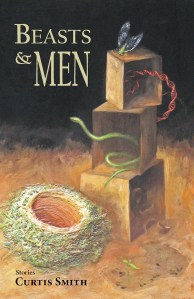 If Hurley’s observation is true of short stories in general, it must be ultra-true of flash fiction, which, to achieve its brevity, may leave out information usually considered essential—place, time, ages of the characters, even the characters’ names. But does the reader necessarily “reconstitute a richly detailed world” from the condensed version, or does the reader accept the author’s floating, unanchored world for what it is? In reading Curtis Smith’s recent microfiction in the fine collection Beasts & Men, I found that I wasn’t filling in missing details; rather, in the best of the stories, the characters became archetypes of the human condition who existed in a fairy-tale-like place of their own—a parallel dimension, you might call it. Instead of making up particulars for their lives, I was content to meet them in that dreamspace where specifics are less important than the overall atmosphere. And maybe that matches a deep sense of the unknowable world embedded in our psyches. My psyche, anyway, because I’m often aware of how little I understand of what’s happening around me.
Roughly, then, my notion of flash fiction is that, like all other fiction, it can be anything the author and reader want it to be. Such is my exhaustively researched antitheory. However, for those who want to pursue these ideas further, two good starting points are the sites maintained by Randall Brown of Rosemont College: Matter Press and FlashFiction.net.
Snarky, impolite footnotes:
*“practice-led research”: As always, we should thank educators and social scientists for sharing their jargon with us literary types. But, to be official, this concept needs an acronym, PLR, and a peer-reviewed journal known by those initials.
**“the reader … their”: OK, I’m old-fashioned, but this still grates on my ears. A pronoun ought to agree with her antecedent. I’ll pass over the loose use of “where” in a context where there’s no clear where there.
That Feeling of No Feeling
April 15, 2013
As I was reading J. M. Coetzee’s Disgrace recently—only 14 years after its publication, and 10 years since he won the Nobel Prize, so I must be catching up—a sentence struck me with enough force that I made a note to come back to it. And thus (after several weeks of forgetting my note, which I emailed to myself) I’ve done so. This is the sentence, written from the point of view of the middle-aged protagonist:
Again the feeling washes over him: listlessness, indifference, but also weightlessness, as if he has been eaten away from inside and only the eroded shell of his heart remains. (Chapter 18)
These words appealed to me as the quintessential expression of the postmodern character, one emptied of true emotion. Add a thick layer of irony as the outer lining of that eroded shell and you have the universal human that Western social evolution has produced.
At least one would suppose so from reading much contemporary fiction. In my own writing, too, the default fictional character seems to be psychologically worn out, spiritually moribund. But, oddly, I don’t feel that way myself most of the time—tired maybe, frazzled, but not listless or indifferent, and certainly not weightless. I’m still romantic at heart. Hopeful and fearful in equal measure. Appallingly juvenile in the imagination.
Most of my stories that begin with that default listless character turn out to be failures, and I discard them. Because real people, and in particular the ones I want to write about, aren’t like that. But it’s hard to change the default setting; I tend to begin with emptiness and then ponder what might fill it.
I wonder how much that has to do with our culture, the profusion of irony, the unwillingness to admit that we believe in and care deeply for certain values. We don’t dare appear foolish.
Coetzee’s protagonist, I should note, doesn’t start out emotionally dead. Though his life is rather barren, he at least keeps himself entertained (mainly with sexual pursuits) until a series of traumas, including the “disgrace” mentioned in the title, drop him to his nadir. The author then carries him through to a curious and bemusing sort of redemption.
My point, if I have any, is that it’s time to change the default setting—to be foolish enough to admit we care about some things, and to write about characters who care.
Anna K. and the Tragic Emotions
December 26, 2012

Leo Tolstoy, in a 1901 painting by Ilya Repin (from Wikipedia)
After seeing the Joe Wright/Tom Stoppard film version of Anna Karenina a few weeks ago, I was reflecting about the way we approach classic tragedies. The film heaps multiple layers of artificiality on Tolstoy’s master work. It places the tale on a stage set and, even when venturing into the outer world, shatters any semblance of reality with devices like obviously fake snow (worse than you get from a spray can) and movements choreographed to resemble high school dance routines. It’s all very clever, but Anna’s ultimate tragedy failed to affect me, and I was reminded of recent stage adaptations of Cyrano and Romeo and Juliet in which the amped-up comedy worked well and the tragedy fizzled.
It seems that we no longer trust tragedy enough to play it straight. We have to skew it to suit our ironic, sophisticated sensibilities—and the result is that the tragedy itself has no impact.
One recent exception was Inis Nua’s highly artificial stage drama Dublin by Lamplight, which provided a surprising jolt of tragic loss after an evening of gags. In an earlier post I reflected about what made that particular stylization work when so many others fail, and my tepid response to Anna Karenina sent me back to similar musings.
While I was meditating about this aesthetic problem—and whether we should even bother staging, filming, or writing tragedies if we don’t believe in their premise—the gunman opened fire at Sandy Hook Elementary School in Connecticut. Twenty young children slaughtered, plus six educators, plus the shooter and his mother. The outpouring of grief and outrage was immediate and nationwide, and my thoughts about literary tragedy seemed insipid and irrelevant.
“There are degrees of tragedy, and this is the highest degree,” said local resident Dan Zimmerman (as quoted by the Associated Press). But technically, in the classical sense, Sandy Hook is not a tragedy; it’s something worse. As Jay Heinrichs argues in his blog about language,
“Don’t call it a tragedy. ‘Tragedy’ implies an act of the gods, something terribly sad but inevitable. Instead, call it a massacre. A massacre is the most violent kind of crime, and it implies that more than one person was involved.”
Whatever term we use for Sandy Hook and other mass murders, it’s good to know that our campy culture can still respond with deep emotion. But, after the initial shock passed, I came back to pondering why occasional stories tap this feeling while so many leave us unmoved. The easy answer is that the Sandy Hook bloodbath was real, whereas Anna Karenina and Shakespeare’s star-crossed lovers are merely characters in stories. But this ignores the fact that all disasters except the ones we experience personally come to us as stories. And there are plenty of reality-based narratives that bounce daily off the shell of our indifference: Fatal expressway crash detailed on the evening news, with the reporter standing by the skid marks—yawn. Assassination of courageous reform leader in Wherezatistan, the last great hope for his nation—yeah, what did you expect from those people?
Jonathan Gottschall’s book The Storytelling Animal points out that stories have always been central to human cognition, a primary way we give shape and meaning to our world. Yet, in our current culture, what does it take for a painful story to make an impact?
It does seem that size matters—sheer numbers make us pay attention. Any one of those little kids in Sandy Hook would have made an affecting story, but one or two would not have drawn the visceral response we gave to twenty.
Youth and innocence also count for a lot. If the victims are young and blameless—too pure to have the traditional “tragic flaws” or to be held responsible for their fate—we’re much more likely to care. As for a guilty person like Anna K., well, maybe she had it coming, maybe she didn’t, but evil happens to everyone. Classical tragedy no longer creates enough shock to the system. After what the world has been through in the past century, I suppose this is not surprising.
Further, inexplicability helps. If we can rationalize away a dark incident, we forget it. If it’s inconceivable that such an awful thing could happen, then we’re stirred.
A well-known quote from Donald Barthelme goes like this:
“The loss of experience is a major 20th-century theme. One makes love with The Joy of Sex hanging over one’s head, and so on.…Unmediated experience is hard to come by, is probably reserved, in our time, to as yet undiscovered tribes sweltering in the jungles of Bahuvrihi.” [A thoughtful comment that ends in a joke, since bahuvrihi is not a place but a type of compound word.]
I’d argue that wherever human beings have culture, experience is never unmediated. We interpret in terms of the categories we know. But there’s a difference between a 13th-century peasant whose mediators are confined to parents, other family members, neighbors, and the village priest and us modern hyper-connected techies with cultural referents bombarding us via TV, Internet, movies, music, books, magazines, etc. We have too many stories colliding in our heads. We’re also ultra-aware of possible fakery, from the tricks of Photoshop to the lies of politicians to the distortions of hurried or irresponsible journalists. Only a truly real story breaks through the layers of mediation. And to be counted as real it must be BIG, SHOCKING, SCARY.
Which leads to the question of which is scarier: the fact that we need major catastrophes to register such pain, or that our civilization presents us with these events with such reliable frequency.
Tidewater Musings
September 9, 2012

One thing I did while not watching the political conventions was to read a fine book by William Styron, a collection of three long, semiautobiographical stories called A Tidewater Morning. Though I read other major books of his long ago, I have little memory of their details—likely a result of my failings rather than his. Maybe the controversial nature of The Confessions of Nat Turner and Sophie’s Choice overshadowed the actual books, or perhaps it was Meryl Streep in the movie role of Sophie. Or maybe I had to grow sufficiently old and disillusioned to appreciate Styron’s unique blend of realism, strong convictions and subtle romanticism. It also helped that, when I picked up A Tidewater Morning, I had just returned from a Tidewater vacation at a place I affectionately call Mosquitoland USA.
In this collection Styron builds riveting stories on minimal plots. The style mixes the relaxed, leisurely, cultured tone of a Virginia gentleman with postwar explicitness:
Mr. Dabney—at this time, I imagine he was in his forties—was a runty, hyperactive entrepreneur with a sourly intense, purse-lipped, preoccupied air and a sometimes rampaging temper. He also had a ridiculously foul mouth, from which I learned my first dirty words.… His blasphemies and obscenities, far from scaring me, caused me to shiver with their splendor. I practiced his words in secret, deriving from their amalgamated filth what, in a dim pediatric way, I could perceive was erotic inflammation: “Son of a bitch whorehouse bat shit Jesus Christ pisspot asshole!” I would screech into an empty closet, and feel my little ten-year-old pecker rise.
Amalgamated filth—what a phrase! Styron achieves a light, detached irony that doesn’t preclude empathy with his characters. In the story quoted above, “Shadrach,” a superannuated black man trudges from the Deep South with the goal of dying on what is left of the Dabney estate, where he was once a slave. Here is Styron’s description of the reaction by the present Dabney patriarch, whose main line is bootlegging:
Mr. Dabney was by no means an ill-spirited or ungenerous man (despite his runaway temper), but was a soul nonetheless beset by many woes in the dingy threadbare year 1935, being hard pressed not merely for dollars but for dimes and quarters, crushed beneath an elephantine and inebriate wife, along with three generally shiftless sons and two knocked-up daughters, plus two more likely to be so, and living with the abiding threat of revenue agents swooping down to terminate his livelihood and, perhaps, get him sent to the Atlanta penitentiary for five or six years. He needed no more cares or burdens, and now in the hot katydid-shrill hours of summer night I saw him gaze down at the leathery old dying black face with an expression that mingled compassion and bewilderment and stoppered-up rage and desperation, and then whisper to himself: “He wants to die on Dabney ground! Well, kiss my ass, just kiss my ass!”
The way Styron has suddenly returned to my consciousness, I feel a bit of Mr. Dabney’s astonishment.
A Pilgrimage with Hugh Nissenson
June 30, 2012
I hereby publicly confess my sins.… I shall write in plain style and tell the truth as near as I am able.

Such is the promise of Charles Wentworth at the outset of The Pilgrim, Hugh Nissenson’s latest novel (Sourcebooks, 2011), and Charles keeps his word, laying out truths more severely than a fundamentalist preacher. Like Nissenson’s previous works (see, e.g., my comments on My Own Ground), this book makes “unflinching” an understatement. The stern eye on human life will never blink. The Pilgrim is a wise and moving book, a finely crafted book, and not for the faint of spirit.
The year is 1623, and the life of man and woman in Plymouth Colony—and in the England that the colonists have fled—matches the famous phrase Hobbes would use 28 years later in Leviathan: “solitary, poor, nasty, brutish, and short.” Except that Hobbes was describing what he called the state of nature, an imaginary condition without culture or government. Nissenson often turns that philosophy on its head, revealing how much blame lies with the institutions that supposedly protect us from our base instincts.
The demands of his Puritan faith torment Charles; he agonizes over his sins and doubts his salvation. At one point, when he complains to a friend that his soul is “quiescent,” the friend offers the kind of capsule life story that the novel uses several times to devastating effect:
Hook replied, “Better than poor Annie Watts in Worksop. She tormented herself day and night as to whether she be damned or saved. She could not bear not knowing, so she threw her four-month-old babe, Clyde, down a well, wherein he drowned. Said Annie, ‘’Tis better to know that I am damned than not to know what God plans for my soul throughout eternity.’ They hanged her.”
Charles will not fault religion for burdening Annie’s mind or the state for executing a mentally disturbed person, nor will the author breach the form to wink at us. Rather, as the ultimate modernist, Nissenson gives us a narrator who is both reliable in his facts and constricted in his interpretation.
Wherever he roams over space and time, Nissenson immerses himself, and his readers, in the moment. In this novel he wants us to see, hear and smell the 17th-century life of these struggling souls, no matter how gruesome it may be. And there is plenty of gruesome throughout the novel. I’ll forebear quoting from the explicit scenes of hangings, but as forewarning, and as a sample of the masterful way the author assembles simple details, here are a couple of passages:
[A bear baiting in the sin capital of London:]
A bear with little pink eyes pursued one of the mastiffs, while the other five dogs pursued the bear. One dog clung with his jaws to the bear’s left front leg, and the bear bit him through his neck bone and got free. Another dog clung to the bear’s belly, just above his private parts. The bear sat up and, with a front paw, struck the dog’s left shoulder. He would not relinquish his hold. The bear ripped open the dog’s breast with his front claws. I glimpsed the dog’s beating heart. The drunken spectators cheered.[An infected finger:]
The doctor came again and said, “See the thinness of skin about the wound? The abscess is ripe for opening.” He sliced it with his lancet, to a great profusion of blood and pus. The inflammation became livid. Little bladders oozing green and yellow ichors spread all over the skin. The tumor subsided, and for an hour or so, I hoped for the best. Then her whole forefinger turned black.
The “plain style” that Nissenson so skillfully imitates was a deliberate attempt by the Puritans to rid their writing, especially their sermons, of the rhetorical flourishes of the Church of England and the aristocracy. Educated at Cambridge, Charles confesses to being “lewdly disposed to beauteous language,” and in reaction he takes on an almost antiliterary straightforwardness. Even so, the vivid details make his account a compelling read. Here, an ugly scene made me smile because it was so perfectly described:
I alighted from my wagon at the inn named The Sign of the Bear and Ragged Staff in Charing Cross, which is in the City of Westminster, a suburb without the walls of London. The inn was crowded with plump, muddy whores, boy prostitutes, and cutthroats armed with daggers. The press of rowdy maltbugs lugged ale, even as little pigs lug at their dam’s teats.
As that pig indicates, the plain style doesn’t preclude an occasional homely metaphor of the sort that the Puritan preachers loved. Here is Rigdale, a would-be preacher:
“Who is close to Christ all the time? Am I? Surely not. He comes and goes from me like the tide upon the beach I once saw at Dover. At full tide, I am soaked by Him, immersed in His mercy, but then He leaves me high and dry, covered with sandy sea weed. Right now, at this moment, I am high and dry, covered with sea weed, sand, and cockle shells. Yet I have faith that the living waters—His precious blood—will wash over me again.”
And, though less frequent than the horror, there are some genuinely lovely passages, especially when Charles’s faith works well enough for him to appreciate Creation:
On the day following, I went to weed in the cornfield. Just before noon, as I pulled a handful of weeds from the crumbling earth, my eye caught the yellowish tassel protruding atop a red ear of corn from its sheath of pointed leaves. I peeled the leaves back an inch or two. An ant was crawling on one of the red kernels. I gazed at my gloved right hand, holding the weeds with their roots covered with soil, and the shallow hole left in the earth around the stalk. Then I digged beneath the stalk’s roots. There I saw the backbone of a herring [used for fertilizer] that had rotted away.
Then my soul flowed joyfully into those elements of fecundity …
Anyone who has read this far may wonder whether the novel has a plot. It does, concerning Charles’s attempt to find peace with God and himself, and as an adjunct to that quest, a godly woman to support him and ease his lust. Along the way, the reader is treated to Indian wars, the disastrous attempt to establish a new colony, Charles’s family history in England and multiple side stories. The dozens of minor characters include historical ones like Miles Standish, William Brewster, Massasoit and Governor William Bradford. What stands out for me, though, are the stark images of 17th-century life, both outer and inner: the decent man straining to find peace in a human-mucked world with more abominations than beauty—and with ideologies more fanatical than rational.
We’d like to believe our world is vastly different now. Sure it is: we have antibiotics for infected fingers.
 The News from Gridleyville